About the Cemetery
Shreveport’s Oldest Burial Ground
Established in 1847, Oakland Cemetery is one of Shreveport’s oldest surviving landmarks and an enduring testament to the city’s earliest generations. Its history reflects the growth of Shreveport from a frontier settlement on the Red River into a prosperous commercial center, as well as the epidemics, wars, and social transformations that shaped the community throughout the nineteenth and twentieth centuries.
Shreveport’s first public burial ground, known as Fannin Street Cemetery, was established shortly after the town’s founding in 1836. Within a decade, however, the growing population had nearly exhausted its available space. On March 30, 1847, Mayor Lawrence Pike Crain and the town trustees established a new municipal burial ground on ten acres acquired from Mary Bennett Cane and her father, Dr. Samuel Bennett. Originally designated simply as City Cemetery, the property stood near the western limits of the developing town. An ordinance required that all burials within the municipal boundaries take place there, while additional regulations adopted in 1849 established procedures for its organization and maintenance. The older Fannin Street Cemetery ceased accepting burials in 1851, and many of its graves were subsequently relocated to the new grounds.
As Shreveport expanded, so did its cemetery. In 1858, land was set aside for the Hebrew Mutual Benevolent Association, establishing the city's first Jewish burial ground. Further improvements and expansions followed the Civil War, although the cemetery repeatedly suffered from inadequate maintenance and neglect. Its most tragic chapter came during the devastating yellow fever epidemic of 1873, which claimed more than 1,200 lives in approximately twelve weeks. With ordinary funeral arrangements overwhelmed by the mounting death toll, approximately 800 victims were interred in a mass grave near what is now the Milam Street entrance. Their resting place remains among the cemetery’s most significant historical features.
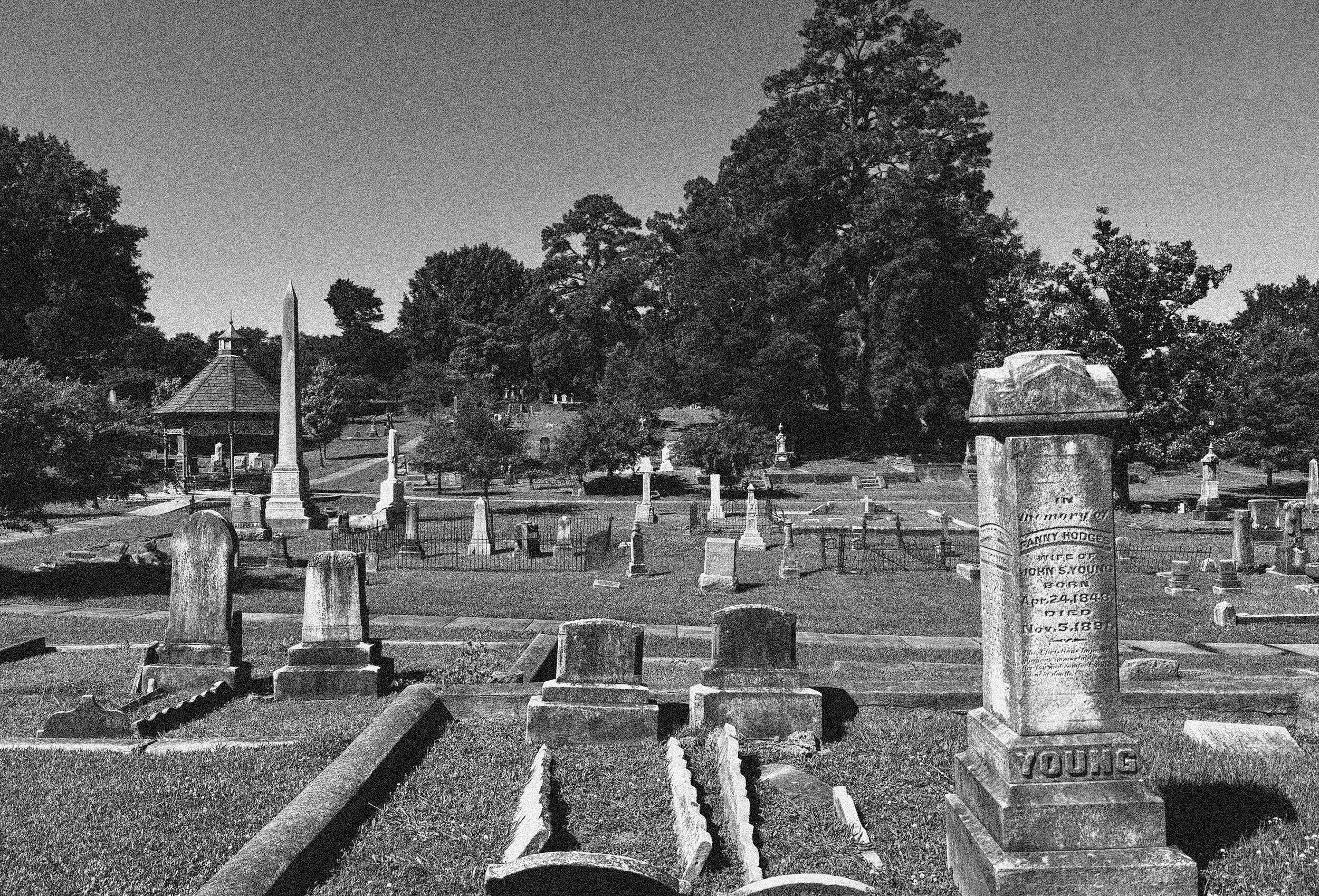
During the late nineteenth century, civic organizations and concerned residents undertook repeated efforts to restore and beautify the grounds. The Ladies Cemetery Association, established in 1894, played an important role in these improvements. Around 1905, City Cemetery became known as Oakland Cemetery, although the precise circumstances surrounding the adoption of the new name remain uncertain. By this time, the cemetery had become the final resting place of generations of Shreveport residents, including prominent merchants, physicians, civic leaders, military veterans, and numerous former mayors.
The opening of newer burial grounds, including Greenwood Cemetery in 1893 and Forest Park Cemetery in 1919, gradually diminished Oakland’s role as an active municipal cemetery. The city continued selling burial plots until approximately 1930, after which new interments became increasingly uncommon. Although Oakland was effectively closed to routine new burials as its available space was exhausted, occasional interments continued under special arrangements. The most recent widely documented burial occurred in 2011, when Shreveport historian and preservationist Eric Brock was laid to rest there with special permission from the city.
In 1977, Oakland Cemetery was listed on the National Register of Historic Places, formally recognizing its historical and cultural significance. Today, preservation efforts continue to protect its monuments, document its many unmarked graves, and recover the stories of those buried within its boundaries. More than a historic cemetery, Oakland remains a remarkable record of Shreveport’s collective past, preserving the memory of the people whose lives, labor, and losses shaped the city.