
Noteworthy Residents A-M
Alexander John Boarman
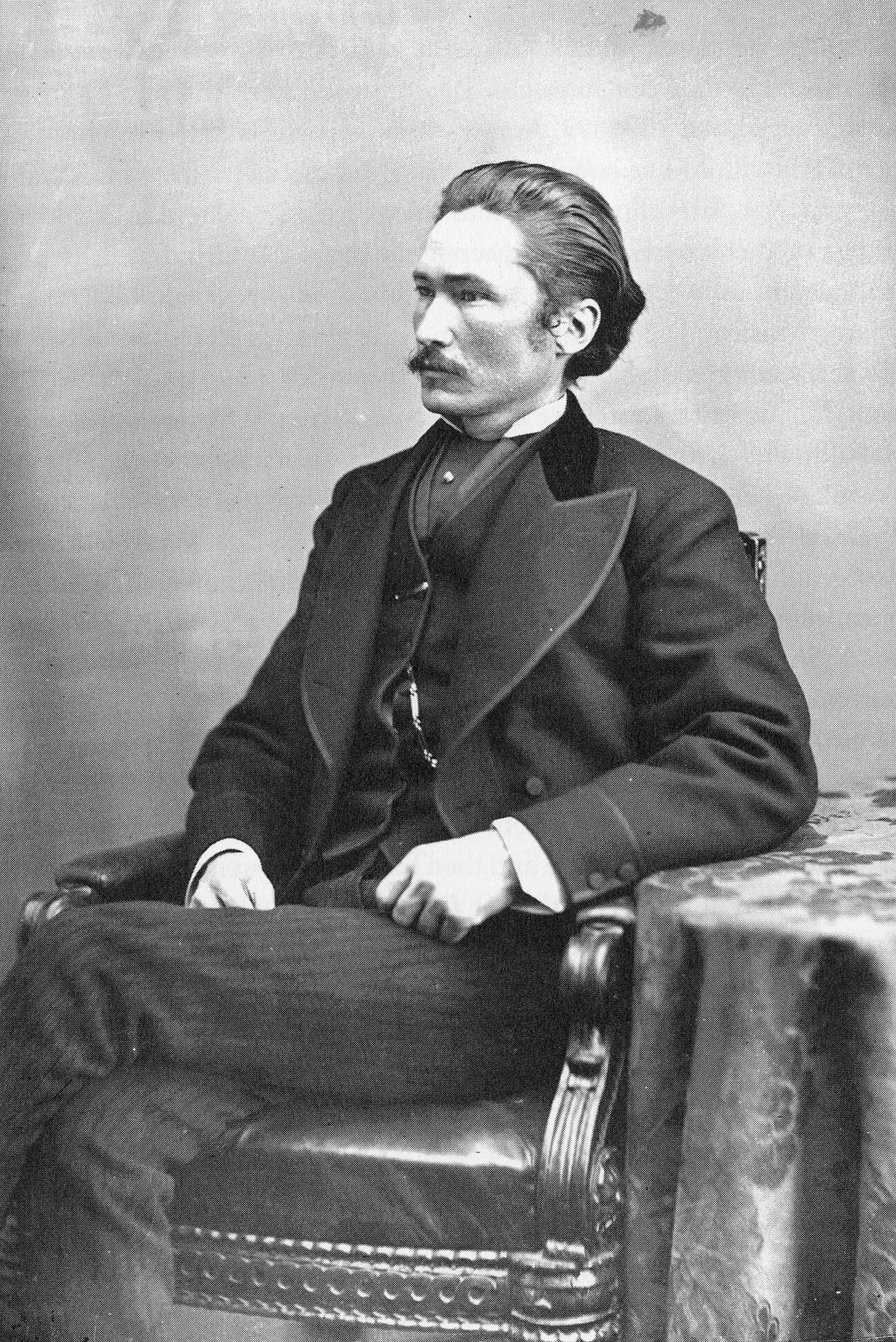
This man has the interesting historical distinction of being Shreveport’s youngest mayor but oldest federal judge. Nicknamed “Aleck,” Alexander John Boarman was a native of Yazoo City, Mississippi, born in 1839, the very year that Shreveport was established. He came to Shreveport as a young child with his parents and as a young man, left to pursue studies at the University of Kentucky. He returned to Shreveport upon his graduation in 1860, and was interning to study law, but the outbreak of war meant those career plans would be delayed. Boarman entered Confederate service in the esteemed volunteer “Caddo Rifles,” mustering in on April 28, 1861 into Company A of the First Louisiana Regiment. By the end of the war, he had attained the rank of Major in the Army of Northern Virginia, and was discharged with an impressive service record.
In 1866, Boarman became mayor of Shreveport, and at the age of 26 years, was the youngest to serve in that office. At the same time, he was finally admitted to the bar. He enjoyed a career in public service that also included a term on the City Council, and representing Louisiana’s Fourth Congressional District in the U.S. House of Representatives from 1872 to 1873. He also served as judge of the Tenth Judicial District Court in Caddo Parish.
In March of 1881, Congress created the United States District Court for the Western District of Louisiana that was comprised of forty parishes and placed the seat at Shreveport. President James Garfield appointed Boarman to the post, and the court met in rooms at 513 Spring Street. The first true federal courthouse was built in 1887 on Texas Street, eventually replaced by the 1911 construction of a new federal building currently housing the Shreve Memorial Library. Judge Boarman oversaw the construction of both courthouses, with a tenure as judge that lasted until his death in 1916. At age 77, this made him the oldest serving federal judge.
Boarman is buried within the Elstner family plot within Oakland Cemetery near his niece, Julia Elstner. His final resting place marked by a large granite marker that is distinctive in its simplicity. The memorial is inscribed with only his name, dates of life and clearly what was the high point of his career, “United States Judge.”
Jacob Bodenheimer
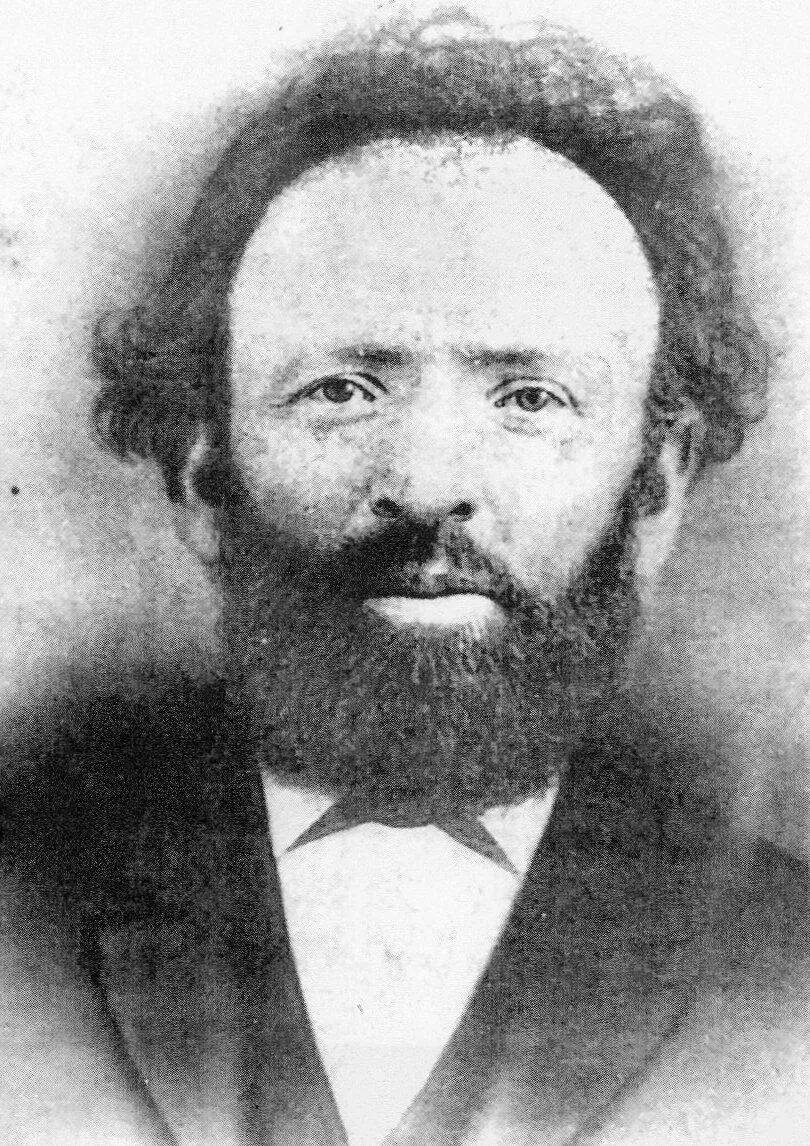
Appearing very early in the story of the settlement of Shreveport was a young German immigrant who braved a journey to the unknown as a very young man. Born in 1808, Jacob Bodenheimer came from Niederhochstadt, Germany as a teenager, making his way to north Louisiana from New Orleans as early as 1827. Besides probably being the first Jewish settler in the area, he came to this part of Louisiana before either Shreveport or Bossier City existed, settling in Bossier Parish. Jacob was just fourteen years old when he stowed away on a freighter, and when he arrived in New Orleans in 1822, it is believed he spoke no English at all. It is difficult to imagine today that a teenager would have had the courage for a journey such as this, to say nothing of the task of building a new life in a completely foreign place at such a young age.
Bodenheimer married his wife, Eliza Weil, also a German Jewish immigrant, in New Orleans in 1832. They moved northward in the late 1830s, travelling by keelboat on the mostly-obstructed Red River, another daunting undertaking. He reached Loggy Bayou in southern Bossier Parish before losing all of his possessions when the boat sank there. Eventually, Bodenheimer was able to establish a home and a living by offering a ferry service on Lake Bistineau, before moving to Bellevue, Louisiana and building a hotel, livery, and general store. The teenage stowaway from Germany became a successful business man and family man in north Louisiana just as the region was beginning to thrive with settlers and commerce.
One of Bodenheimer’s sons, Emmanuel, became the first and only mayor of South Highlands in 1915, before the neighborhood was incorporated into the city of Shreveport in 1927. Another son, Henry, also served in city government and established a successful insurance company in Shreveport. A daughter, Harriette, married Captain Simon Levy in 1866. The Bodenheimer family represented the beginning of a Jewish migration to the area that continued to grow in large numbers until after the Civil War. By 1858, the Hebrew Benevolent Society (which would become the Shreveport Jewish Federation) dedicated the “Hebrew Rest” area of the city’s Oakland Cemetery, reflecting the influx of Jewish settlers.
Jacob contracted malaria and died in March of 1865. The inscription on his monument reads: “May His Soul be Placed in the House of the Lord.” (image) Following his death, his widow Eliza married Jacob Citron in 1867, but divorced him in 1888. All of these Bodenheimers are buried in Hebrew Rest. (images)
Mary Bennett Cane
One of the most influential women in the early history of both Shreveport and Bossier City rests eternally in one of the most often-visited plots of historic Oakland Cemetery. Mary Doal Ciley Bennett Cane, who died in 1902, was the wife of two prominent early pioneers. She was married first to William Smith Bennett, one of Shreve Town’s original founders. After Bennett’s death in 1837, she married James Huntington Cane, her first husband’s partner, with whom she built a majestic home on the Bossier City side of the Red River. Her home there was partially constructed of timber shipped from her native New Hampshire. The influence of Cane is obvious in the earliest names attached to the east side of the river: Cane’s Landing and Cane City.
Mary was born in New Hampshire in 1812, purportedly the illegitimate daughter of a gambler, and died nearly 90 years later as one of the wealthiest women in the south. Most of her expansive life was spent in the Shreveport-Bossier City area. As a proprietor and part-owner in the Cane and Bennett commercial trading enterprises on both sides of the river, she became quite influential through the use of her wealth and status as a first citizen. It is an interesting twist of history that she is actually buried within the walls of Oakland Cemetery, on land that she donated to the city of Shreveport. Cane also donated the land where Princess Park is located. Her reputation as a patroness of the arts, a generous benefactor of many causes, and a true pioneer of what was once western frontier, makes Mary Bennett Cane a fascinating historical anomaly.
When she arrived in the area as a young woman in her twenties, Mary was the wife of William Bennett. Yellow Fever claimed Bennett first, then Cane’s wife, so in 1839 James Cane and Mary Bennett became more than just accidental business partners. They became man and wife. In a fashion that was quite unusual in the early nineteenth century, Mary worked out the equivalent of a pre-nuptial agreement with Cane that would allow her to retain her inheritance from Bennett, separate from the marital estate. Once again, however, she was to find herself widowed in 1845. James Cane also died of Yellow Fever. She later married a third time in 1850, to a riverboat gambler named Granville Alexander, but she sued him for divorce a few years later. It is a testament to her prestige and influence that the divorce was not only granted, but two attempts by her former husband to lay claim to community property were legally denied.
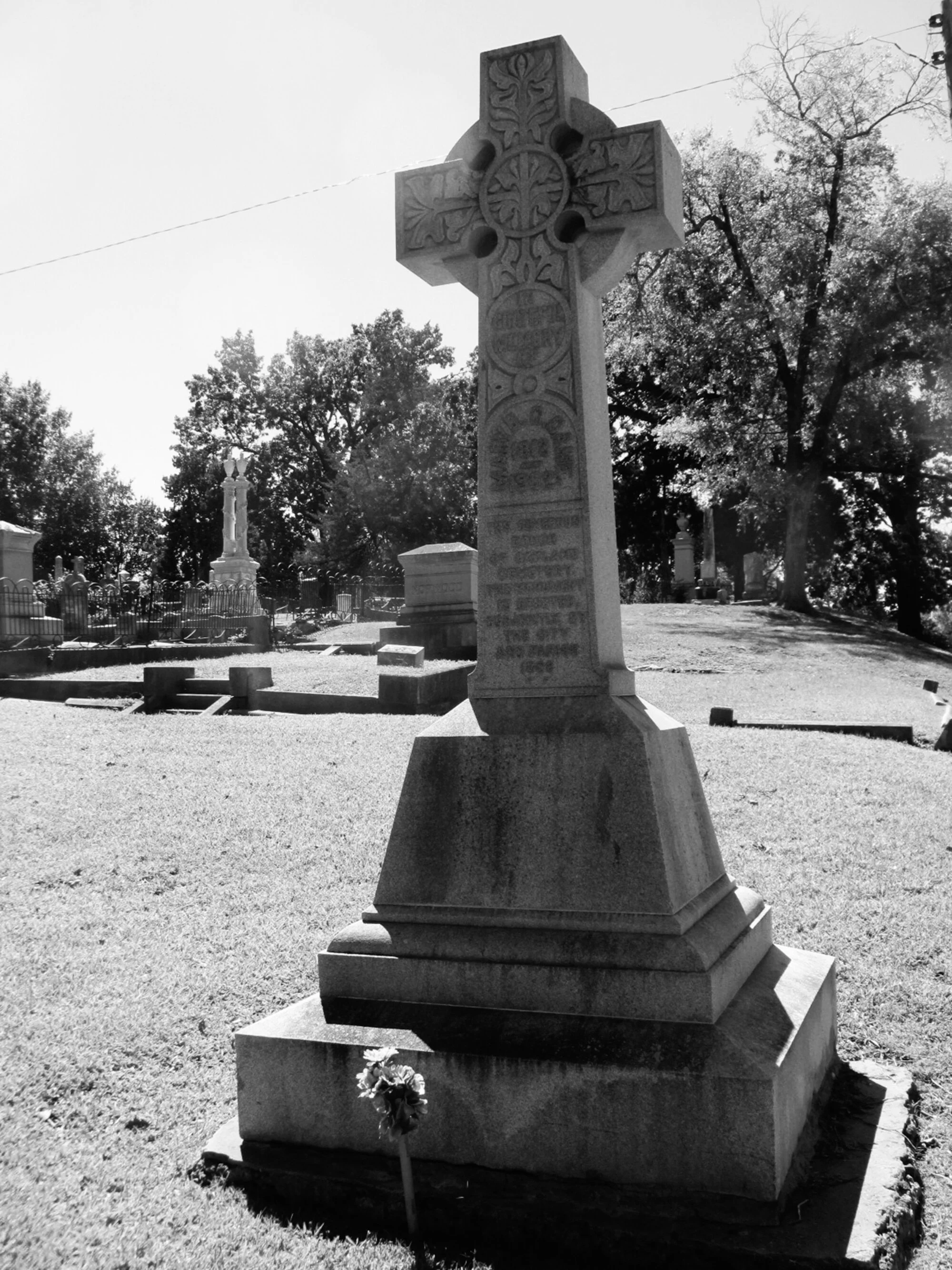
Mary Bennett Cane gave birth to three children, but only one lived to adulthood, a daughter named Jennie. When Mary died in 1902, the Shreveport City Council voted to erect a monument to her at her grave in Oakland Cemetery. It is a tall Celtic cross, large enough in stature to memorialize the “Mother of Shreveport.”
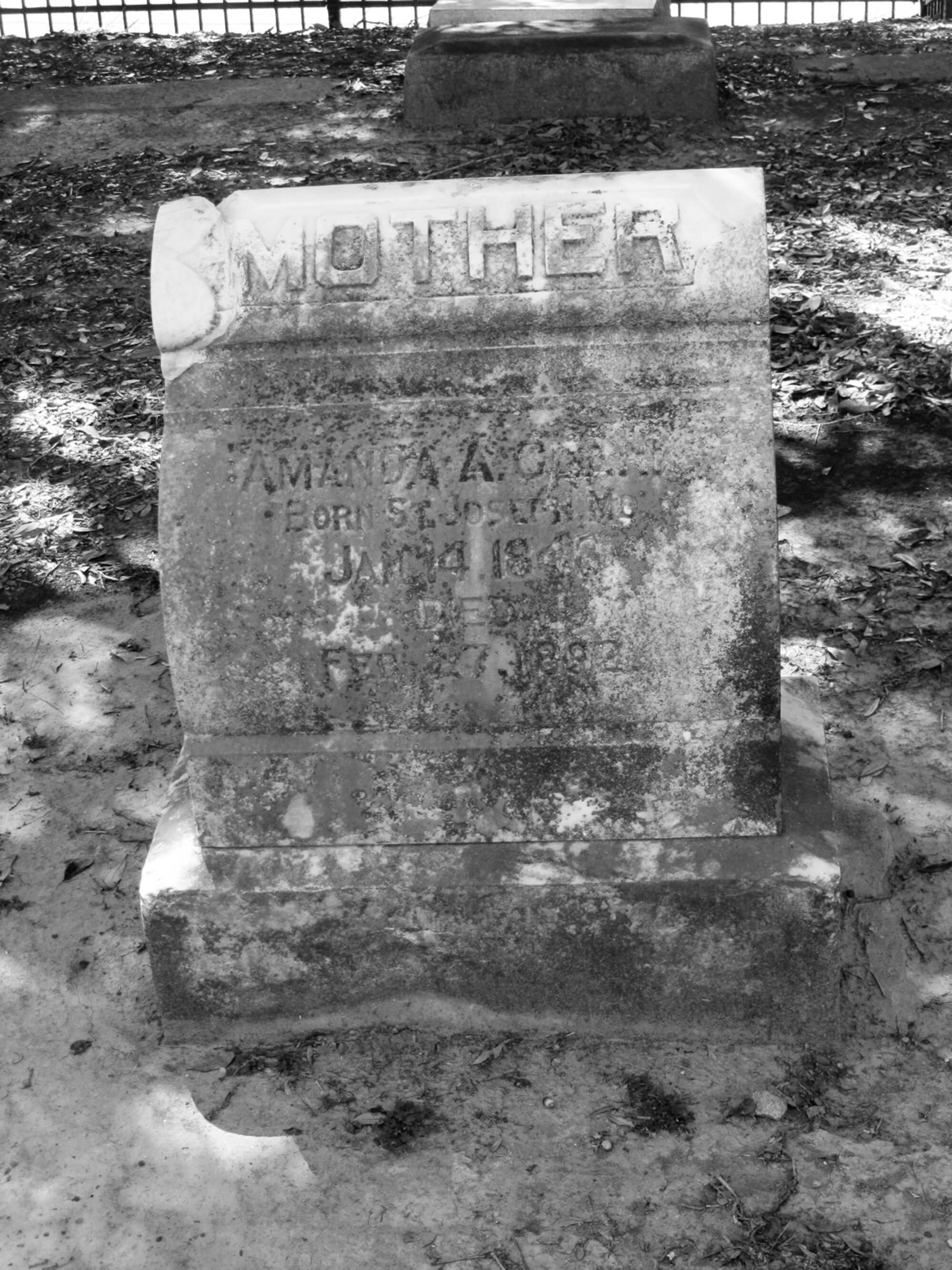
Amanda Arnell Clark and Dr. Dickerson Alphonse Smith (Mother and Son)
Amanda Arnell Clark was a slave born in St. Joseph, Missouri in 1840. She moved to Shreveport after receiving her freedom and an inheritance of $1,000.00 from her former owner, Luther Arnett. She became a noted Shreveport philanthropist and real estate developer, who passed that influence on to her son, Dickerson Alphonse Smith. Smith was the first African-American physician to practice in Shreveport. Interestingly, his life spanned two quite different eras. Late nineteenth century restrictions on people of color in the South represented the social norm. However, by the early twentieth century, progress in equality of education and opportunity was becoming evident. Dr. Smith is an example of this progress, as one among the first-generation born as the institution of American slavery ended.
Clark also used her inheritance to make sure her son received an education and went to medical school. Smith went to Chicago to study at Rusk Medical College, where he graduated in 1892, which was the same year his mother died. He married his wife Frances in 1893 and they also made their lives in Shreveport. In keeping with his mother’s philanthropic tradition, Dr. Smith established a home for indigent elderly in Cedar Grove in 1930, in addition to maintaining properties his mother built downtown. Part of her original property is now occupied by the old Joe D. Waggonner federal building, and two others still stand at 211 and 215 McNeil Street. Dr. Smith enjoyed a successful medical career until his death of a cerebral hemorrhage in 1925.
Mother and son Amanda Clark and Dickerson Alphonse Smith are buried near one another in Oakland Cemetery, facing Christian Street (now Austin Place).
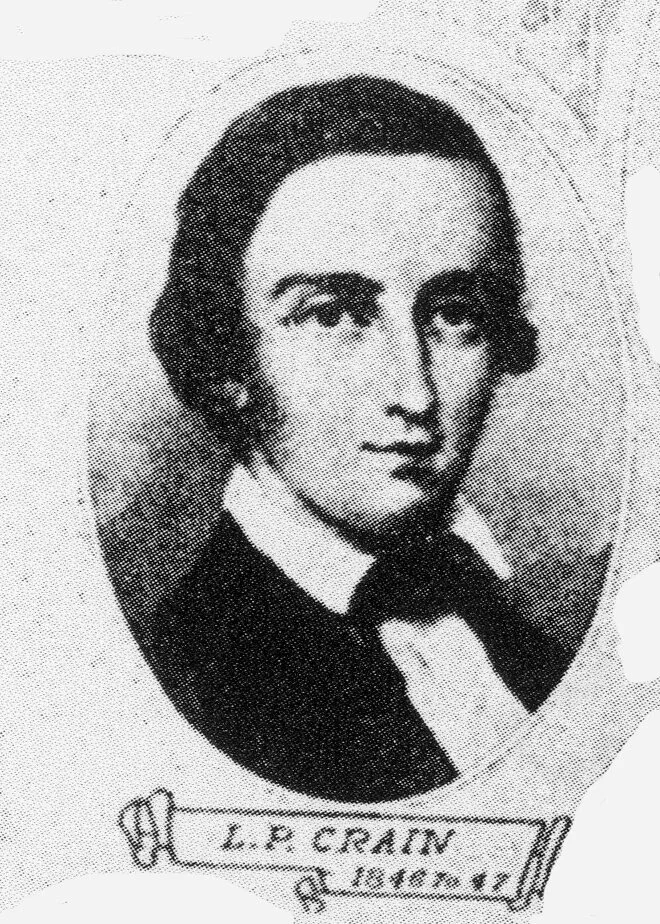
Lawrence Crain
One of Shreveport’s youngest mayors, Lawrence Pike Crain has an interesting legacy in the annals of city history. Had his life not suddenly ended at the age of 41 years, Crain is someone who doubtlessly could have contributed much more. A Virginia native who moved with his family to Rapides Parish, Louisiana while he was still a child, Crain was just 23 years old when he was elected to serve on the Board of Trustees (now Shreveport City Council) in 1841. He was re-elected multiple times to the post, and served for much of his life until his death. In 1846, Crain became Shreveport mayor, as only the sixth man to have ever held the office and the second-youngest to ever hold that office (he was 28 years old when elected). Shreveport was a young city, at one time the farthest point west in the United States, and it is helpful to remember this when considering the anomaly of Crain’s public service. It is unusual that Crain continued to occupy the seat of a city councilman even while he simultaneously served as mayor. Of course, such a thing would be unthinkable today.
In 1848, Crain married Rachel Stokes, and the couple had four sons: John, Robert, Montfort and Lawrence Sidney. The Crain’s daughter-in-law (married to Lawrence Sidney) was Mary Ford, the daughter of Reverend J. Franklin Ford of the First Presbyterian Church. The Crains were actually charter members of this early Shreveport religious community, although records indicate they were also involved with the establishment of St. Mark’s Episcopal Church in 1851. Their family tale is indicative of how closely related the distinguished families of the area actually were. The family home was located at the corner of Milam and Market Streets and was purported to have been a grand example of New Orleans style architecture, complete with grand balconies and cast iron work.
In addition to being mayor at the time of the acquisition of land from Mary Bennett Cane to be set aside for Oakland Cemetery in 1847, Crain helped codify the city ordinances of Shreveport for the first time in 1849. This was a significant step in advancing Shreveport from the status of a frontier town that administered random justice to that of a modern city. Interestingly, Crain’s reputation and standing could certainly have placed him on a trajectory to higher office, but Crain repeatedly refused to run because he thought it would cost him friendships.
Crain died in 1859 at the St. Louis Hotel in New Orleans, where he was celebrating his 41st birthday. He fell suddenly ill and succumbed to tuberculosis just three days later. He rests in Oakland beneath a large gray marble slab next to his wife, four sons, his daughter-in-law, and one granddaughter. The large family plot is completely surrounded by stone and accented at the center with a simple marble marker bearing the surname of Crain.
Moses H. Crowell
Moses Crowell was mayor of Shreveport at a colorful and interesting time in the city history, for it was a period that witnessed three rival claimants to the office following a disputed 1871 election. During the summer of 1871, not only were there three men claiming to be mayor, but there were also two rival city councils in existence! Both councils operated independently, each claiming to be legitimate, with mayoral administrations that paralleled them both. In addition to the challenges of financing rival city governments, even for a brief period of time, there was the confusion that prevailed over which contracts were legal and valid and which city ordinances citizens would be expected to obey.
The previous occupant of the mayor’s office, Jerome Bonaparte Gilmore, decided to not seek re-election in 1871, leaving two candidate vying for the office – Moses Crowell and William Shivers. Crowell was a Virginia native who achieved the rank of Major in the United States army and was commander of a corps of Union troops dispatched to Louisiana as an occupation force. Shivers was a local man who had fought for the Confederacy. Given the Reconstruction politics that prevailed at the time, Crowell was therefore unpopular with some Shreveport citizens, but the election nevertheless proved to be close. The official vote count had Shivers winning by a count of 371 to 347.
However, the Louisiana State Legislature passed a bill during the summer of 1871 that permitted the governor to appoint city officials in lieu of elections. This was perhaps an attempt to cool tensions related to federal occupation during Reconstruction, but it meant near-chaos for the city. As it turns out, Governor Warmoth’s choice for Shreveport mayor was Moses Crowell. The situation was further complicated because the process of re-ordering city government also left the Gilmore administration intact.
Suit was brought in the Tenth Judicial District Court to resolve the three-mayor dilemma, and in the meantime, William Shivers died. The court held that Warmoth’s appointment of Crowell was legal, but Gilmore appealed the decision to the Louisiana State Supreme Court, an action that only resulted in further confusion and delay when that body said the case must be re-tried. In the end, it was compromise between the factions that brought an end to the divided city government, and Crowell prevailed as mayor. He worked to enhance Shreveport’s viability as a rail center, but resigned in March 1873, just months before the city was struck by a horrific Yellow Fever epidemic. He remained in Shreveport until his death in 1875.
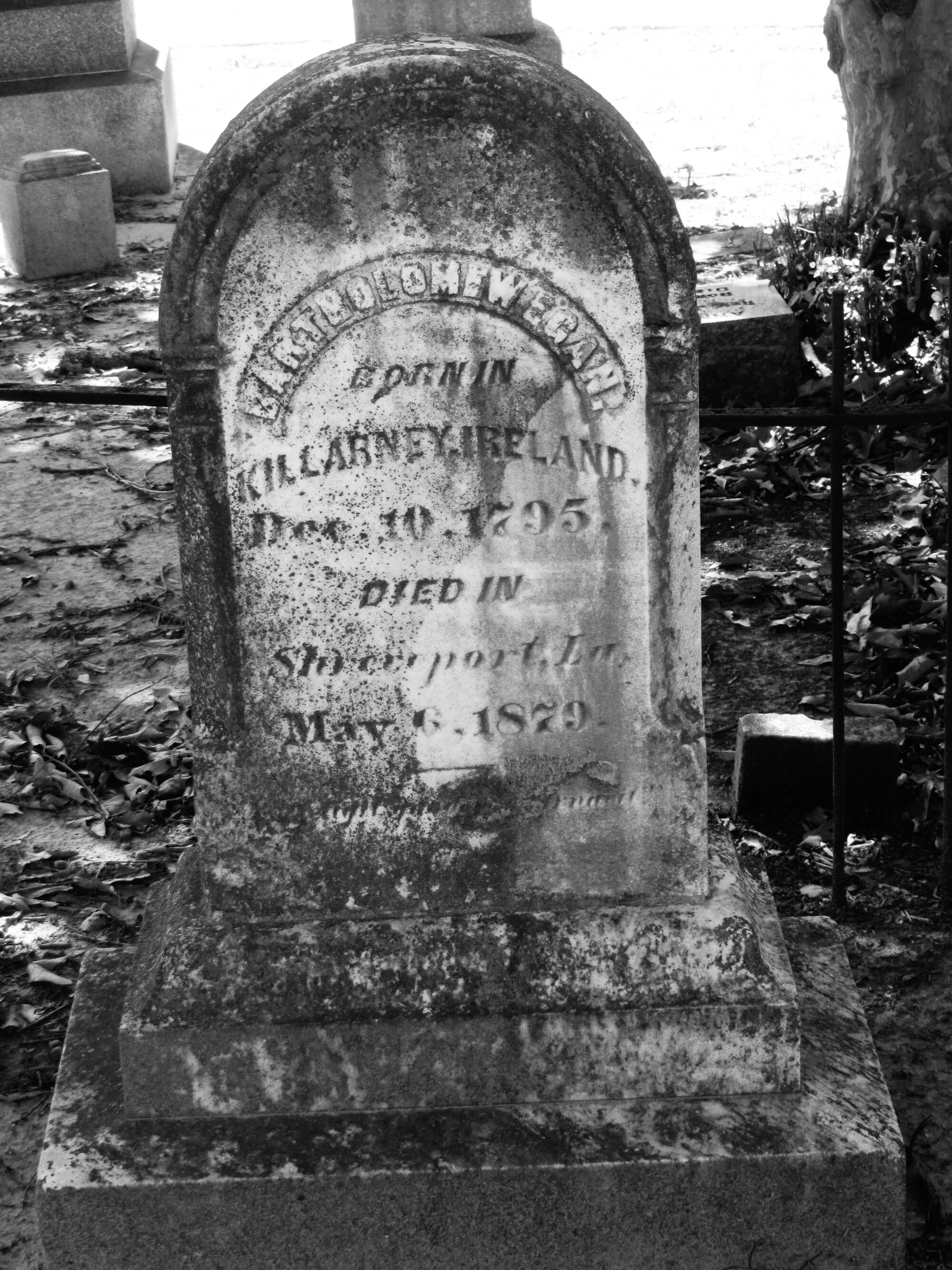
Bartholomew Egan
A native of Killarney, Ireland and born in 1795, Egan migrated to the United States, received medical training in Virginia, and finally settled near Mount Lebanon in Bienville Parish in 1847. He was a significant pioneer in the establishment of the antebellum community there. Egan became president of Mount Lebanon University, the first university in north Louisiana. Converting from Roman Catholicism to the Baptist tradition, Egan was the founder of the Louisiana Baptist Convention. By 1863, the Mount Lebanon facility had become primarily a hospital and nursing home for wounded Confederate soldiers and veterans, and the school officially closed for educational purposes that same year. By 1882, the buildings were re-purposed to open Mount Lebanon High School, but were finally destroyed by fire in 1886. The facility was vitally important to north Louisiana during the war; however, as was the service of Benjamin Egan, for he became Surgeon General of the State of Louisiana.
Egan’s leadership during the Civil War led Confederate President Jefferson Davis to remark of him that “he was one of the ripest scholars of his age.” His contributions to the city of Shreveport are also etched in the public record. In his official report to General Thomas Manning, Adjutant General of Louisiana, dated 23 December 1863, Egan noted, “at Shreveport I was called upon unexpectedly to improvise a hospital, in which one hundred seventy-five patients, many laboring under alarming diseases, were treated.” This became part of the Confederate Marine Hospital. It was located in a valley between large hills on what is today Greenwood Cemetery. It was locally known as "the Pest House," for that is where consumption or tuberculosis patients were quarantined.
During a time of major crisis in Louisiana, at the peak of the Civil War, Egan was responsible for overseeing the establishment of a state laboratory at Mount Lebanon to produce medicines, not only for the military, but for the civilian population as well. He supervised the creation of a distillery for “medicinal whiskey,” a castor oil factory, as well as “indigenous medicines.” The work at Mount Lebanon under Dr. Egan’s supervision was ahead of its time, for research concentrated on development of new pharmaceutical compounds and ongoing medical research in to better treatment methods for the sick and wounded. Here Egan learned that the native poppy of Louisiana was as effective in offering pain relief as imported opium. He also cultivated hemp as a substitute for rope.
Egan married Ann Cormick in Ireland in 1817, and the couple had a son, William, who was listed on the 1850 census as living with them in Bienville Parish. Egan’s diligent work in advancing the cause of wartime medicine was equally matched in his concern for caring for the sick and dying among the civilian population. His practice of medicine continued in Shreveport after the war, and he had a great research interest in the Yellow Fever epidemic of 1873. Egan died at the age of 83 in 1879, and his marker in Oakland is a simple headstone noting his Irish heritage.
Claiborne Lee Foster
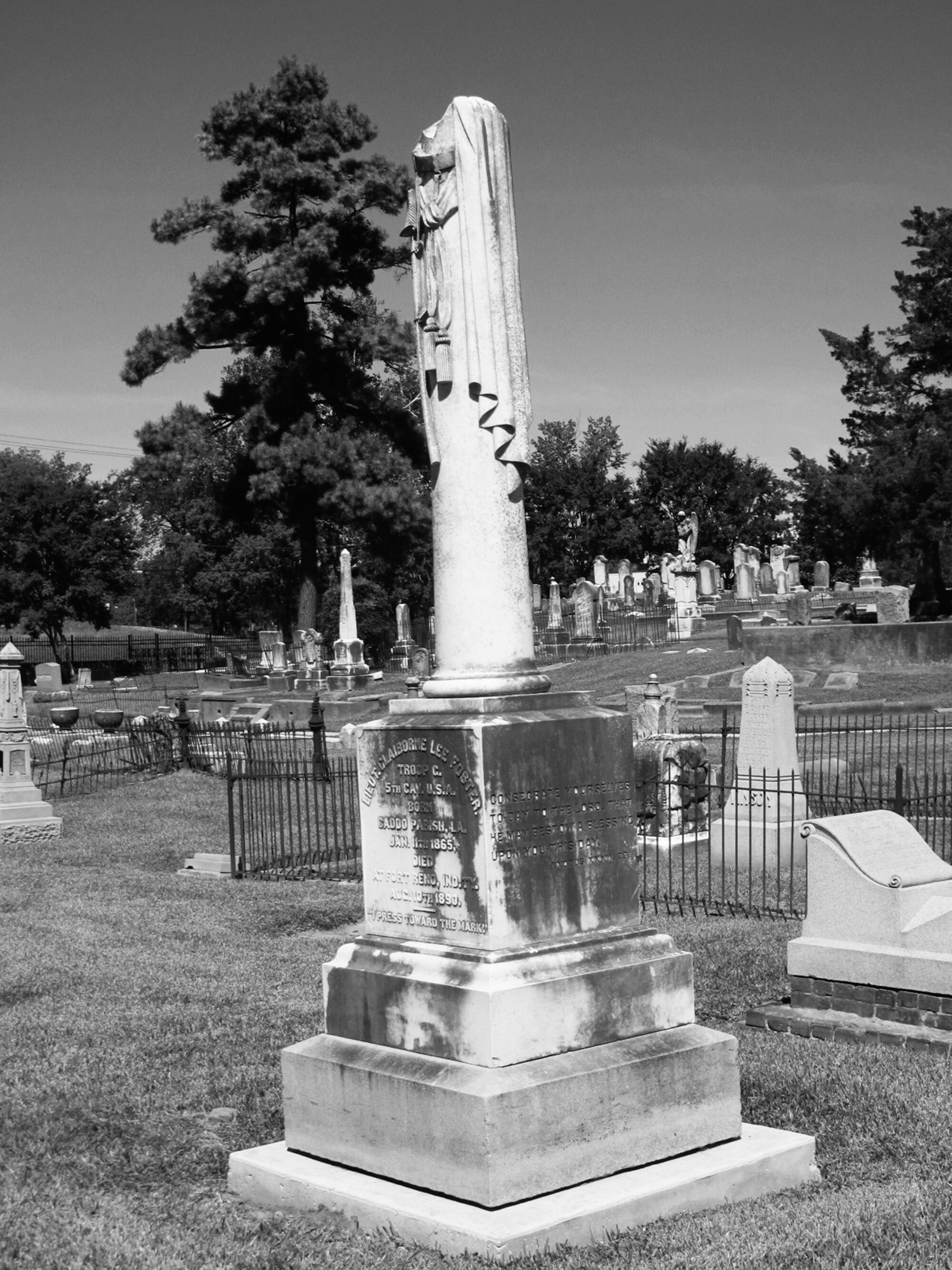
Son of James Martin Foster and older brother of John Gray Foster (both chronicled separately in this volume), Claiborne Lee Foster was born in 1865 in Shreveport, as the Civil War was coming to a close and a new era of renewed westward expansion was underway. Following his education in Shreveport, Claiborne graduated from West Point Military Academy and commissioned as a Second Lieutenant in the United States Army. His assignment over Troop G of the 5th Cavalry Regiment took him to the Indian Territory at Fort Reno, Oklahoma, where he met his death at the young age of 25 in 1890. Like many other families of the age, the Fosters suffered the loss of more than one child to violence or illness at an early age. In addition to the murder of John Gray Foster at the age of 23, the family had other losses of very young children: Erastus Foster at the age of four, Ernest Foster at the age of two, and Blanchard Foster at the age of one year. All are buried together in a large family plot at Oakland.
Upon his graduation from West Point, Fort Reno in the Indian Territory was a notable assignment for Claiborne Foster, but it came at a time of great transition in history. Fort Reno was established in 1874 as a means of keeping peace for the diversity of native tribes in the area, taking its name from General Jesse Reno, a Civil War hero for the Union. It was to extend control over the reservations of the Cheyenne and Arapaho, and forces from Fort Reno had frequently seen armed conflict throughout the 1870s and 1880s. The soldiers of Fort Reno had not only maintained the peace among the natives, but also worked to keep out other settlers who surged in the territory as part of the “Boomer” invasion. The fort played an important role in the transition to Oklahoma statehood and with stability in the region, the reasons for the fort’s establishment ceased to exist. In fact, Oklahoma became a United States territory in 1890, the same year Foster died.
It was during the opening of Oklahoma for settlement that Claiborne Foster seems to have stood out among his fellow officers at Fort Reno. He and a small group of men were able to hold back a large group of settlers pushing into reservation lands, an event that was reported in newspapers as far away as New York. This he seemingly accomplished with only words and no use of force.
A memorial for him published soon after his death notes that, “there were no negative qualities in his make-up. His mental and physical conditions were reflections the one of the other – both indicative of robust strength.” Yet, despite his youth and vigor, death claimed him at Fort Reno, where witnesses reported he uttered one final word: “happy.” His death while in military service at a young age is the reason for Foster’s most unusual marker at Oakland Cemetery. It depicts an unfinished column, with an officer’s sash and sheath draped over it – symbolizing a young hero.
Captain James Martin Foster
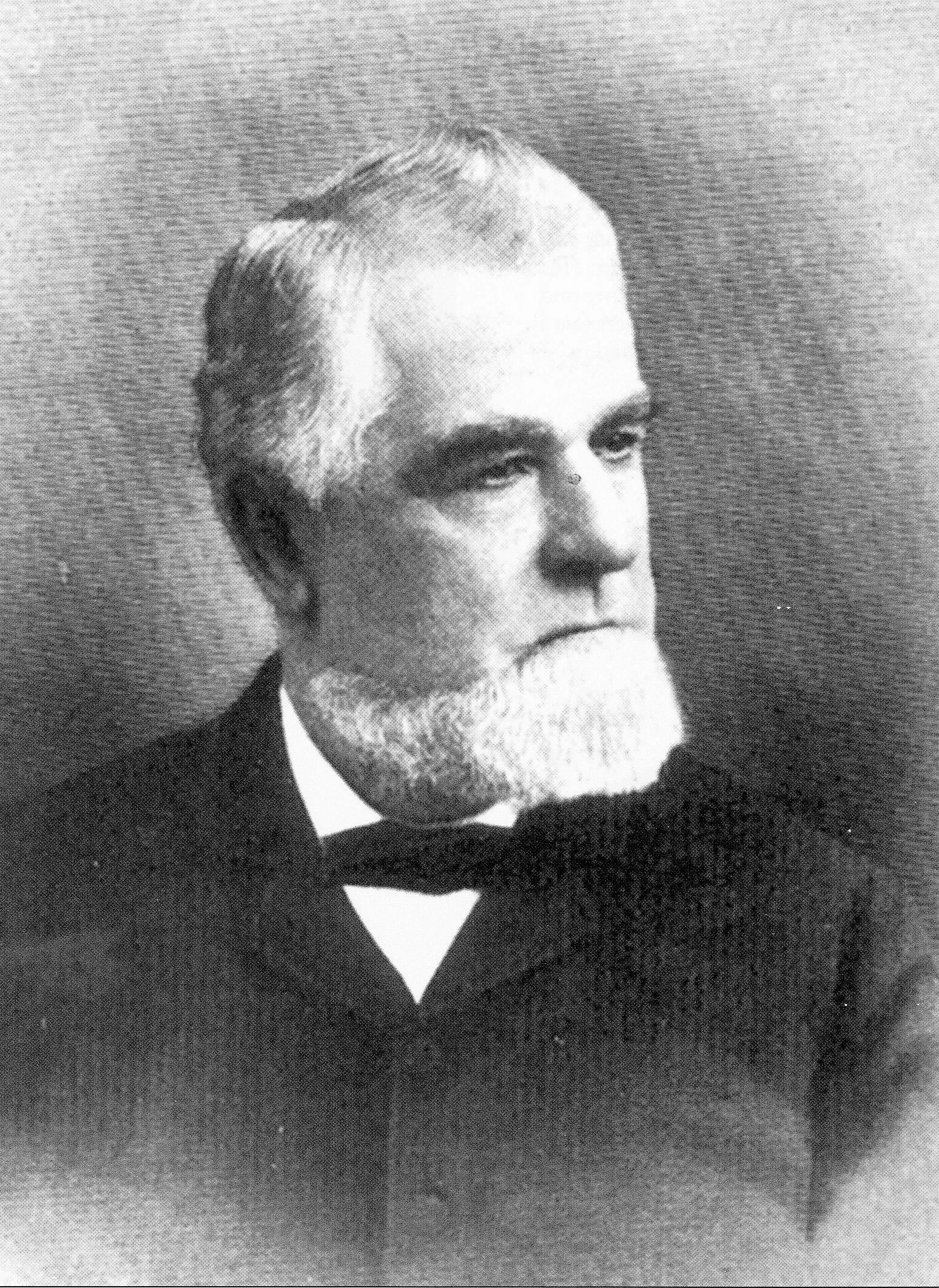
James Martin Foster arrived in Caddo Parish at the young age of ten years, when his farming parents relocated to the fertile Red River lands from Monroe County, Alabama in 1841.
He pursued academic study in civil engineering at the Western Military Institute in Kentucky before returning to the area in 1859 to continue in the cotton business that his father had begun. Foster could not have known that his decision to turn away from engineering pursuits in favor of returning home would figure so prominently in the history of the region. He returned to Caddo Parish on the eve of Civil War, and the Foster family plantation placed him geographically near major activity of the Red River Campaign of 1864, when Union General Nathaniel Banks advanced on Shreveport. Following the Battle of Mansfield, the Foster plantation served as a hospital for the wounded and dying. In the aftermath of the war, Foster and his brother, Capt. C. J. Foster, were among the early few who were able to successfully make the challenging transition from an economy of slave labor to one modelled on free labor.
A prominent figure within the state Democratic party, Foster emerged as a natural leader during the precarious Reconstruction period in Louisiana, and again during the scandalous Louisiana Lottery affair of 1892. He was a man who was known for his strong principles and sense of prevailing personal integrity, attributes which made him the longest serving president of the Caddo Parish Police Jury – with a record eight terms in that office. This tenure amounted to laudable community service, as he reportedly donated the salary he received to the Genevieve Orphanage in Shreveport.
Foster married Ellen Long of Natchitoches in 1859 and the couple had eleven children. One of their sons, Claiborne Lee Foster, was a West Point graduate who died in the Indian Wars and is profiled separately herein. His wife Ellen (or Nellie, as she was sometimes called) was also a community leader, serving as the first president of the Hypatia Club and the Pelican Chapter of the Daughters of the American Revolution. The prominence of the family is obvious from the state-wide obituaries which honored Capt. Foster, including a special editorial in the Shreveport Times that noted, “another grand old hero of Louisiana and the South passes away.” His death on December 11, 1900 followed injuries sustained in a fall from a horse some months before, which gradually eroded his health. The plot he shares with his wife in Oakland Cemetery is marked by an interesting and amusing monument that memorializes both husband and wife. Perhaps as a final tribute to her husband or out of humble deference to her husband’s stature and prominence, the inscription under Ellen’s name reads, “She hath done what she could.”
John Gray Foster
The son of James Martin Foster, one of the area’s wealthiest planters and most influential citizens, John Gray Foster was only 23 years old and a recent alumnus of the University of Virginia, when he was murdered on June 12, 1901 on the family estates in Bossier Parish. Because of the wealth and influence of the Foster family, the large plantation holdings were often the scene of disputes and conflicts, with neighboring planters as well as between laborers and their supervisors. The patriarch of the family, James Martin Foster, had died just a few months before, leaving sons John Gray Foster and his brother, James Martin Foster, Jr. to take over and manage the family business. John Gray Foster came to the family cotton plantation in order to help resolve a dispute among workers, and it proved to be a fateful day for the young man who had only recently stepped in to his father’s footsteps.
Accounts of the events of that day claim that Foster reprimanded a worker for drawing a pistol on his overseer. The worker then reportedly struck Foster in the head with a hoe or other farm tool with sufficient force that Foster retreated inside the plantation office to be treated. Later in the day, Foster and the overseer went to the laborer’s cabin to fire him, and the worker opened fire with a shotgun, striking Foster in the chest and mortally wounding him.
As expected, the area was outraged over the murder of Foster, and his death was reported in major city newspapers across the country. A manhunt involving hundreds of searchers ensued for the murderer, known as Prince Edwards, along a stretch of the Red River north of the Foster lands. Word then spread that Edwards had taken refuge in the Kinnebrew Store, along with a cultic African-American preacher known as Frank Smith, who called himself “the Prophet,” and a fellow cult member named F.D. McLand. The men belonged to a movement called “The Church of the Living God,” and had apparently plotted the deaths of several prominent officials. A search of smith’s rooms found an objected called “the Ark of the Covenant,” which was marked by crude unknown symbols and contained evidence of further plots. Prince Edwards was never found but Bossier Parish indicted him on charges of murder in January 1902. However, Smith and McLand were moved to the Bossier Parish jail. On the night of June 15, an angry mob of nearly 200 men stormed the jail and forcibly took the two men to Arkansas Road and lynched them. The area was still driven by a vigilante justice mentality at the turn of the twentieth century.
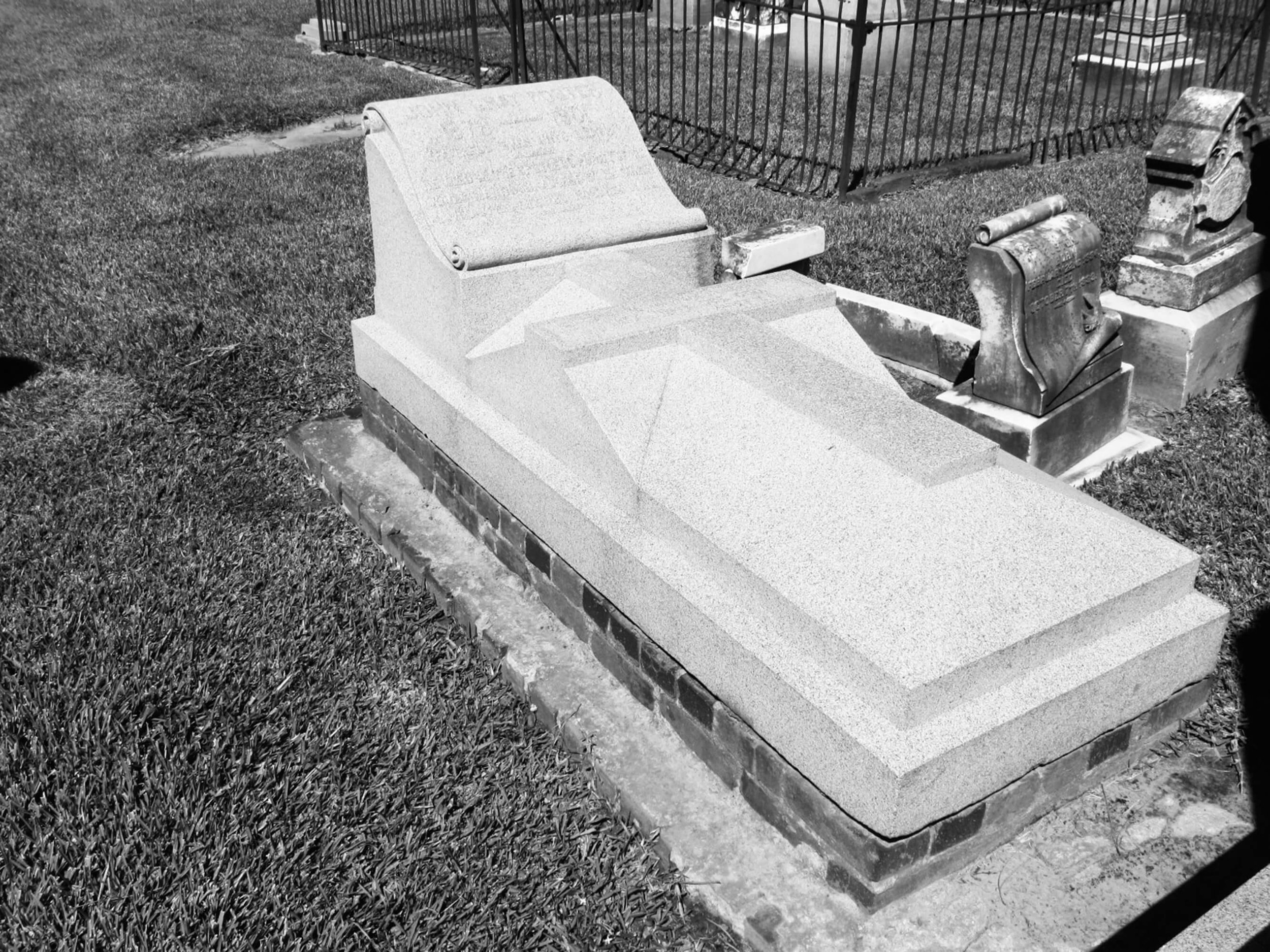
It was a bizarre ending to a life young and full of promise. Following a funeral at First Presbyterian Church, John Gray Foster was interred at Oakland Cemetery, with his name engraved on the large obelisk that marks the Foster family plot.
William Walton George
Shreve Town had humble beginnings in 1835, but the promise of prosperous commerce on the newly navigable Red River brought many to the area. On March 20, 1839, the Louisiana Legislature officially incorporated the previous village of Shreve Town as Shreveport, and gave full authorization for the city to begin operating under its own constituted government. The new city would have a mayor, five trustees, a treasurer, an assessor, a tax collector, and various other administrative posts that might become necessary. The term of office for all elected officials was one year, and all male citizens aged 21 or older with a residency in the area of at least six months were eligible to vote. This legislative provision explains why some early Shreveport mayors and other officials have tenures in office that extended no more than one year.
Among the first four trustees of the new city government was Dr. William Walton George, who actually served Shreveport in an interesting variety of capacities. Besides his service as one of the first trustees, George was the first president of the Shreveport Medical Society, and he also served as Shreveport’s second mayor in 1840. In 1842, George was elected to two more consecutive terms as mayor. He was also one of the first deacons for the First Baptist Church. He is an example of the hard-working spirit that accompanied the earliest permanent settlers of the frontier town, those willing to contribute in many diverse ways to the development and nurture of the fledgling river port.
Dr. George was a native of Georgia, born in 1807, and he graduated with a Doctor of Medicine degree from Transylvania University in Lexington, Kentucky in 1832. He married Mary Frances Battle in 1834. The couple had no children. There was an 1857 fire that destroyed his medical office near Texas and Market Streets, and it appears that Dr. George primarily practiced frontier-style medicine by making house calls, since there were no hospitals known to exist in the city prior to the Civil War. In 1861, Dr. George was one of four candidates for the Louisiana State House of Representatives, but lost the election.
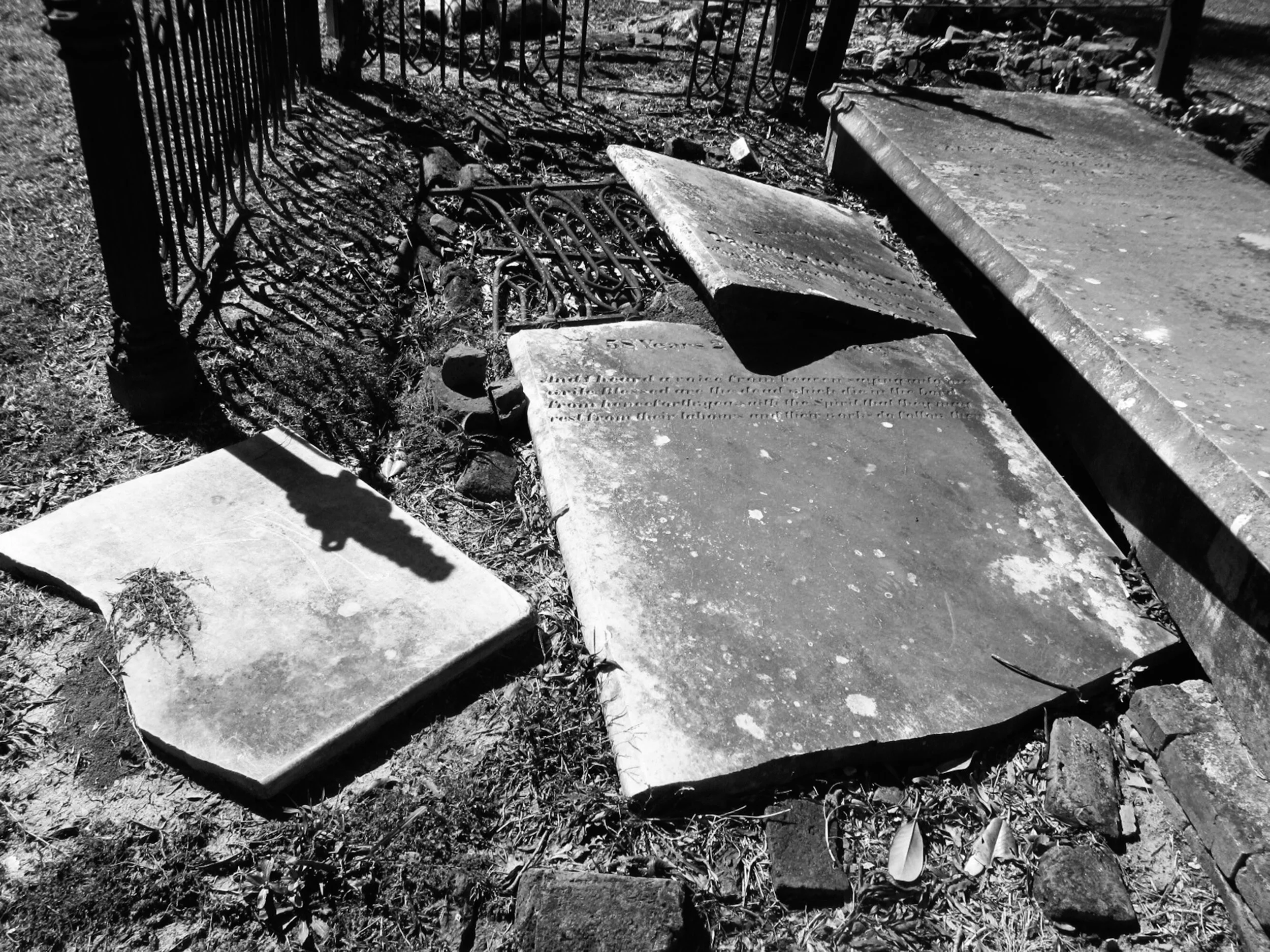
He died in New York City in 1865, under unknown circumstances, but clearly the couple was still making their home in Shreveport, as his body was returned to Shreveport for burial. Mary died in 1899 and rests beside her husband in Oakland Cemetery, with flat markers covering their graves.
John Lee Gooch
Within the story of Oakland Cemetery are occasionally found poignant reminders of lost chapters of city history. While it seems unlikely that prominent citizens would be among those pages of lost history, there are nevertheless a few notable examples. Mayor of Shreveport during the crucial years of 1864-65, just as the Civil War was coming to a close and north Louisiana was the target of a Union advance in the Red River Campaign, John Lee Gooch left behind only sketchy information about his life. Sadly, the final details of his life and death are wrapped in every greater obscurity, as the exact location of his burial within Oakland Cemetery is unknown. His grave is unmarked, and information about his death and funeral is also incomplete.
It is believed that Gooch was a native of Mississippi, probably born in 1828. He married Matilda Sterrett in 1855, and the couple is listed on the 1860 United States Census with two children living in Shreveport, but by the time of the 1870 census, the couple reported having an only son named Lee, aged 7 years. Matilda (Mattie) Sterrett was a daughter of Alexander Boyd Sterrett, the first sheriff of Caddo Parish, who is profiled separately herein.
The historical record does reveal that John Lee Gooch was the defendant in a law suit brought by his siblings over aspects of their mother’s estate in 1872, and that this case reached the Louisiana State Supreme Court. Because of that record, we know that Gooch had at least one brother named Thomas Gooch and that their mother was named Martha Gooch. Much of the remainder of Mayor Gooch’s life remains a mystery, as do the circumstances surrounding his death in 1877. Even the Shreveport City Council records relating to affairs within the cemetery are sparse for the years of 1875 – 1878, with no entries in the record at all during the year of 1877. The site of his grave is unknown, but it is believed he is buried within Oakland Cemetery near his wife, Matilda. They may be resting near the remainder of the Sterrett family, whose grave locations are also unknown.
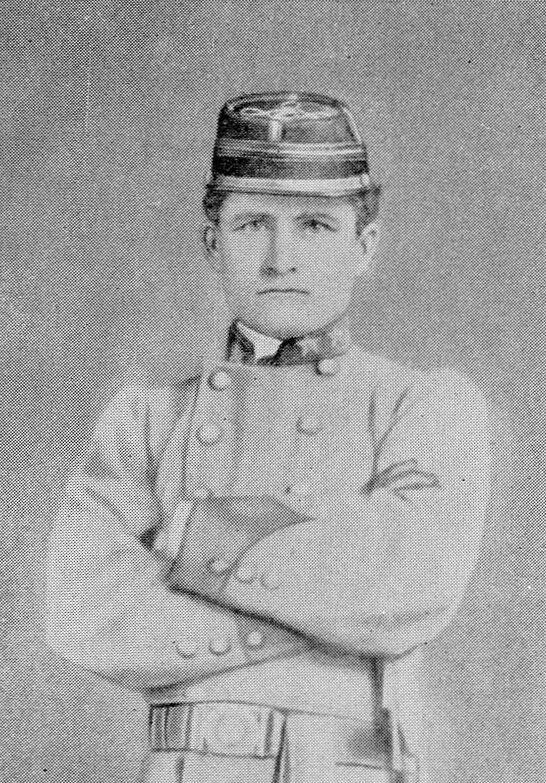
James Madison Hollingsworth
This Confederate hero of the Battle of Shiloh reached the rank of Lieutenant Colonel in the 19th Louisiana Regiment. Hollingsworth came to Louisiana from his native Alabama in 1840 and later finished his formal schooling at the Western Military Institute in Kentucky. His social and educational background naturally drew him in to military service on behalf of the Confederacy in 1861. Following the war’s conclusion, Hollingsworth vigorously pursued the life of a planter in the region, with farm land located in Caddo, Bossier and DeSoto parishes. His marriage to Elizabeth Key Quarles in 1859 produced three children.
Hollingsworth is further noted for his radical politics, as he is credited with being one of the primary organizers of the White League in Shreveport. In 1874, the local chapter of this state-wide paramilitary group began to operate. It was primarily an association forged among former Confederate soldiers committed to the political structure of the Old South. The Louisiana White League began in St. Landry Parish and quickly spread to other parts of the state. The groups worked to restore the old Southern Democratic Party to power, and often used tactics of intimidation against Republican candidates, former slaves, and any officeholder or representative of the Reconstruction government. Unlike the Knights of the White Camellia or the Ku Klux Klan, the White League was not a secret society, and grew rapidly by issuing emotional public appeals to former Confederates and Democrats to join.
There are dramatic examples in Louisiana history of the White League’s violent clashes. In Coushatta in 1874, six Republican officeholders were killed after being promised safe passage to Texas if they would abandon their offices. Also, the same year in New Orleans witnessed what became known as the Battle of Liberty Place, following a White League purchase of a shipment of arms which arrived in the city on the steamboat Mississippi. When the state militia tried to intercept the arms shipment, a battle ensued, but it proved to be one in which the White League prevailed. The organization clearly sent a message that Republican Reconstruction policies would not hold in Louisiana without armed resistance. Hollingsworth was the first leader of the White League in Shreveport, dedicated to the same principles. Estimates regarding the strength of the White League across north Louisiana stand at approximately 10,000 men, and the Shreveport Times published editorials prompting men to join. The overall goal of the White League was to force Republican Reconstructionists to adopt the white-supremacist politics of the Democratic Party or “be driven from the country and killed.” The White League ceased to operate within a few years of its formation, but the return of Louisiana to its pre-war Democratic status is at least partially due to the intimidation and violent tactics of the organization. They were largely responsible for turning an enforced pro-Republican electorate into the “Solid [Democratic] South that lasted until the 1970s.
Hollingsworth died in 1894 and is buried in Oakland Cemetery, his grave marked by a distinguished monument with Corinthian columns and a large urn at the top. He is buried next to daughter Pearl, who died in infancy in 1872.
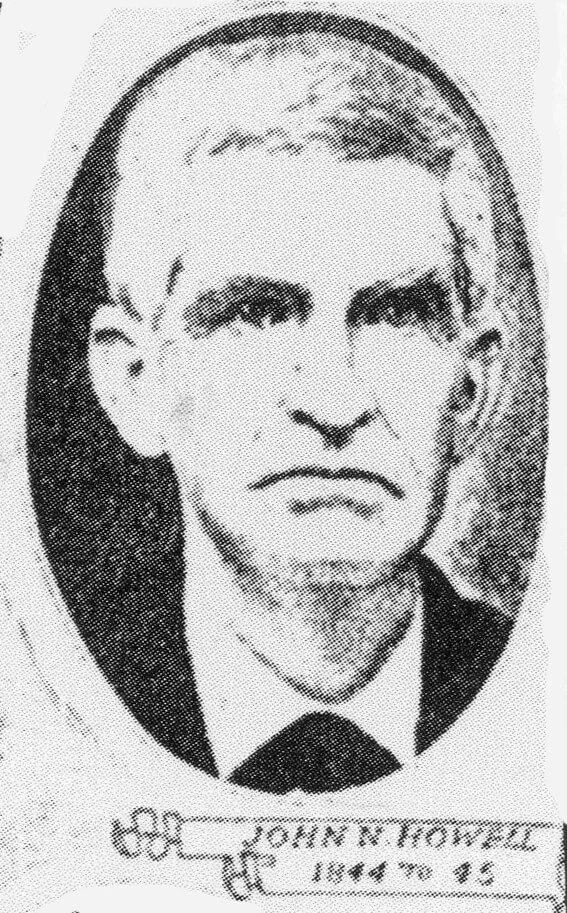
John N. Howell
One of the most distinctive and impressive markers within Oakland Cemetery memorializes the life of one of Shreveport’s earliest mayors. John N. Howell was mayor from 1845 – 1846, during the time which Oakland Cemetery was being established as the city burial grounds. Howell was therefore one of Shreveport’s earliest permanent residents, coming from North Carolina in 1840. He is listed as one of the incorporators of the Red River Navigation Company. The Howell home, built in 1849, was one of the city’s earliest residential structures at the corner of Spring and Lake Streets, but of course is no longer standing. However, its construction in 1849 illustrates how lively the now-downtown area was as a residential center in the early years of city history.
The Howell family was active in the emerging social scene of Shreveport. They also were fully engaged with early philanthropic efforts of the young city and were among the charter members of First Baptist Church when it organized in 1845. In fact, Howell was one of the first two deacons of the church. Records also indicate that Howell provided foster care to numerous homeless children in Shreveport, with one count at 23 children who were taken in by Howell at his wife at varying points in time.
When it came time to structure some system of higher education for the city in the immediate post-Civil War era, Howell was among the board of trustees for an entity known as Shreveport University, which was located on Texas Avenue near the intersection of Greenwood Road. Following the Yellow Fever epidemic of 1873, the school of higher learning began to dissolve as faculty and students either fell ill, died, or fled the area. The institution was forced to close in 1876, and when the buildings went up for auction at a sheriff’s sale in 1877, John Howell purchased it for $1,500. He tore down the existing structures and re-purposed the brick for the construction of a new First Baptist Church.
Howell died in 1882 at the age of 76 and is buried in Oakland near his wife, Mary Jane Howell Furman, and his mother-in-law, Eliza Scott Davis. The interesting iconography of his marker includes a large anchor with the words, “my hope in Christ is strong,” and “the steps of a good man are ordered by the Lord and he delighteth in His way.”
Benjamin Jacobs
A native of Prussia, Benjamin came to America in 1842 to join his brother, Edward Jacobs, who had already set up residence and business in Shreveport. Within just a few years, the brothers Jacob had established a successful mercantile on Texas Street, appropriately titled E & B Jacobs and Company. The brothers enjoyed a diverse business, trading in everything from cotton to tobacco, but also developed a fortuitous interest in banking. In 1877, the E & B Jacobs Bank opened for business, and this institution later became First National Bank of Shreveport.
The impact of the Jacobs family on Shreveport history is obvious in the tracing of the family tree. The brothers Benjamin and Edward married sisters, Amazona and Palestine Cole of Blanchard, respectively. Their success in business, level of community engagement, and response to civic duty is all well documented in the story of this city, and was passed to future generations of the Jacobs family. Benjamin served as treasurer of the Cotton Exchange and was also a director of the Shreveport Coast Navigation Company, which transported goods from Shreveport to New Orleans in the 1870s.
Records indicate that Benjamin Jacobs was of sufficient wealth standing in Louisiana to be the recipient of a presidential pardon for activities during the Civil War. President Andrew Johnson signed the pardon on 26 September 1866, citing that Benjamin Jacobs, “by taking part in the late rebellion against the Government of the United States, has made himself liable to heavy pains and penalties; and whereas, the circumstances of his case render him a proper object of Executive clemency.” There were, of course, economic motivators for men like Jacobs to actively seek a presidential pardon after the war, since any property that had been taken by the federal government during hostilities could not otherwise be reclaimed. By the end of 1865, pardons were coming out of President Johnson’s office at the rate of over 100 per day; by the time that Jacobs’ was issued in 1866, over 7,000 women had property restored due to executive clemency.
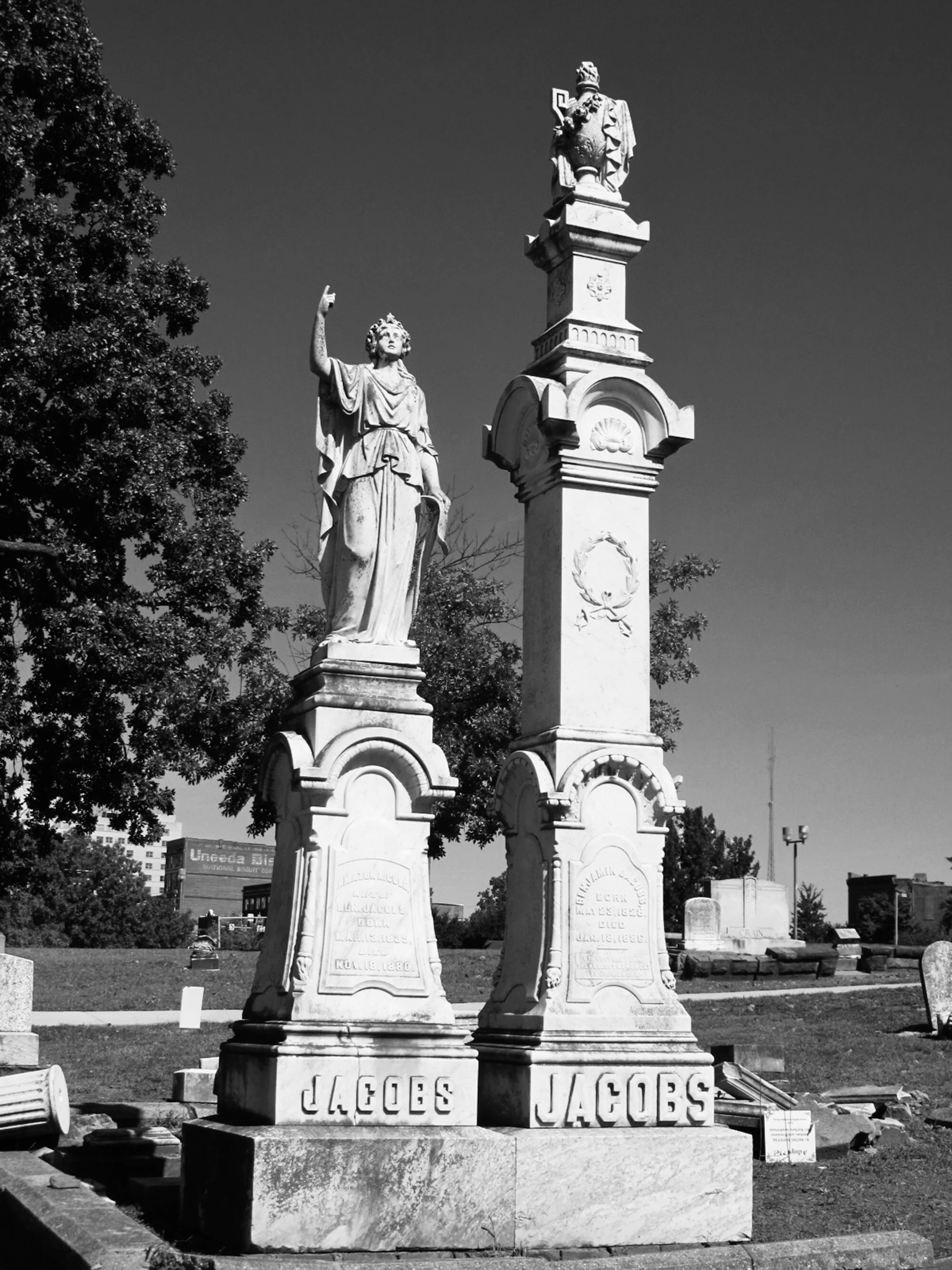
Jacobs and his wife Amazona had several children, but only two who lived to adulthood. Amazona predeceased Benjamin, dying in 1880, and the couple are buried side by side in a remarkable family plot in Oakland Cemetery. Their monuments are among the most beautiful and distinguished within Oakland, and remain in excellent condition today. His marker, characteristically larger than his wife’s, is inscribed with his birth date of May 23, 1828 and his date of death as January 18, 1886. His monument also bears an appropriate epitaph: “His virtues form the noblest monument to his memory.” Both monuments are Graeco-Roman motifs filled with religious and heroic motifs. Amazona’s features a goddess facing west, one arm raised, an index finger pointing toward Texas. On her elegantly quaffed hair is a tiara with a single Texas Star.
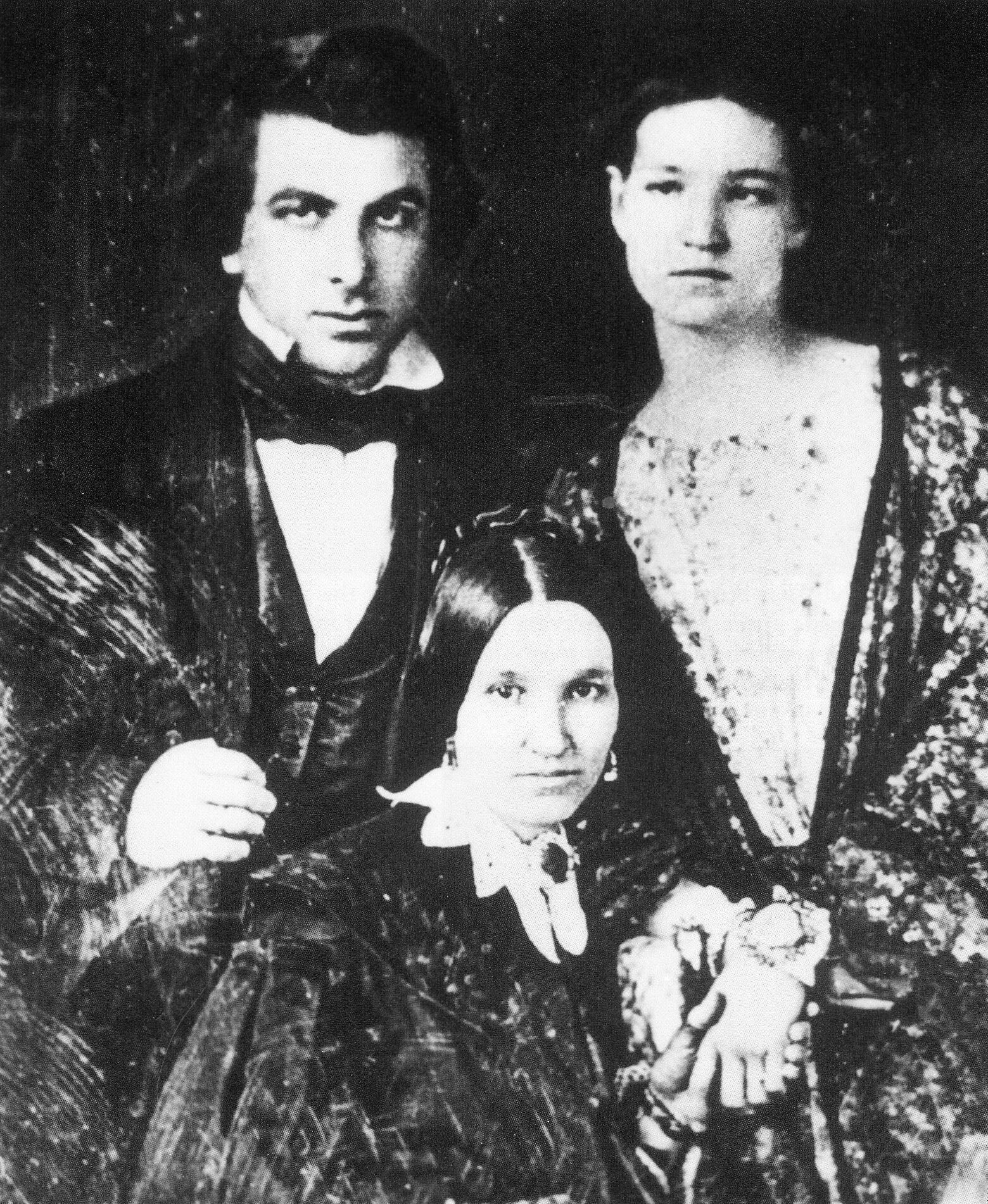
Edward Jacobs
Born Ephraim Jacobi in Freienwalde, Germany in 1822, this immigrant to Louisiana became one of the pillars of early banking and commerce in Shreveport by the 1850s. As a young man, he crossed the Atlantic in 1842 and found his way to New Orleans, where he shed his old-world identity for the name of Edward Jacobs. Realizing the commercial opportunity that existed in the fledgling Red River port, Jacobs came to Shreveport a couple of years later.
His brother Benjamin also came from Germany to join him in business, and together they established E & B Jacobs and Company, a successful mercantile on Texas Street. There was no aspect of commerce that the Jacobs did not have an interest in – including cotton, furs, tobacco, real estate and banking. Each area of interest supported the other; it was an interest in cotton that led Jacobs to purchase large amounts of warehouse space in downtown Shreveport. By the time of the Civil War, Jacobs was significant in assisting with the passage of goods through the city headed to other Confederate supply hubs.
Jacobs’ venture into the banking business resulted in the creation of several area financial institutions. This legacy is still visible today in an early banking location, established at 525 Spring Street and which still stands today as the Spring Street Museum. The earliest records available for this property indicate a transfer took place in 1865, but it is unclear whether the building stood on the site at that time. However, the transfer of the property to Dew Talley in 1866 signaled its first use as a bank, and it became the property of Edward Jacobs in 1877. This was the forerunner of what became a most successful banking business, the First National Bank, once said to have “the patronage of the largest firms, the most prominent and wealthy citizens, and also the surrounding country.” The bank occupied three separate locations in Shreveport, ever expanding in size and influence, to occupy the corner of Market and Milam Streets. It is the oldest bank incorporated in Louisiana.
Jacobs’ marriage to Palestine Cole of Alabama produced twelve children; six of whom lived to adulthood. His son, Walter B. Jacobs, followed his father in to the banking business and served as second president of First National Bank. There are records of the Jacobs’ family contributions to the community during the Yellow Fever outbreak of 1873, including the donation of cash sums to help with food and supplies at the peak of the epidemic. The Jacobs made their family home in a Victorian mansion that stood at the corner of Travis and McNeill Streets, and that structure is reputed to have been the largest mansion in Shreveport at the time it was built in 1886. There are unfortunately few surviving examples of this era in Shreveport architecture, and the Jacobs home is no exception. In 1922, the home was torn down to allow construction of the YMCA on its site.
Although Jewish and a founding member of B’nai Zion Temple, Jacobs is buried within the nonsectarian section of Oakland Cemetery. Upon his death in 1896, he was buried in a prominent family plot, marked by a monument that recognizes the family’s stature and legacy in Shreveport history.
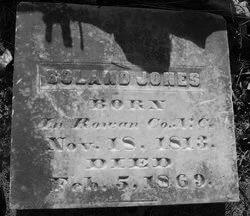
Roland Jones
One of the most damaged and endangered grave plots in Oakland Cemetery belongs to early Shreveporter Roland Jones and his wife, Annie Neville Stokes Jones. Roland Jones, born in North Carolina in 1813, was one of the original settlers at the time of Shreveport’s incorporation, and was a graduate of Cambridge Law School. His wife, Annie, was the daughter of North Carolina Governor Monfort Stokes. The couple moved to Shreveport, where Jones established himself in a law career. He served in the Louisiana Legislature in 1844, and was commissioned judge in Caddo Parish in 1851, and again in 1852.
Jones was elected to serve as United States Representative for Louisiana’s Fourth Congressional District from 1853 to 1855, making him an eyewitness to the brewing sectional controversies that would erupt in to civil war in less than a decade. He served in national office at the time of the border wars between Kansas and Missouri that became known as “Bleeding Kansas” beginning in 1854. The conflict had its origins in the issue of the expansion of slavery in to new territories, something to be decided by “popular sovereignty” according to the Kansas-Nebraska Act of 1854, which created the new territories in the Midwest. The act effectively repealed the Missouri Compromise of 1820, which had sought to prohibit the expansion of slavery in to new territories north and west of a line drawn from the Louisiana Purchase. As a United States Congressman, Roland Jones was embroiled in this heated controversy, but voting with other Southern Democrats in favor of allowing the issue of slavery to be decided by voters in the new territories. The Kansas Nebraska Act precipitated border clashes between settlers, resulting in the deaths of approximately 100 people. It is hard to know, but perhaps this taste of political life soured Jones on future public service.
Roland Jones died in 1869; his wife Annie lived until 1895. They are buried next to each other in Oakland Cemetery, but their plot was heavily damaged by winds of a 2009 tornado that struck Shreveport. The condition of their monuments highlights the need for care and attention to preservation and restoration as an ongoing effort in the cemetery.
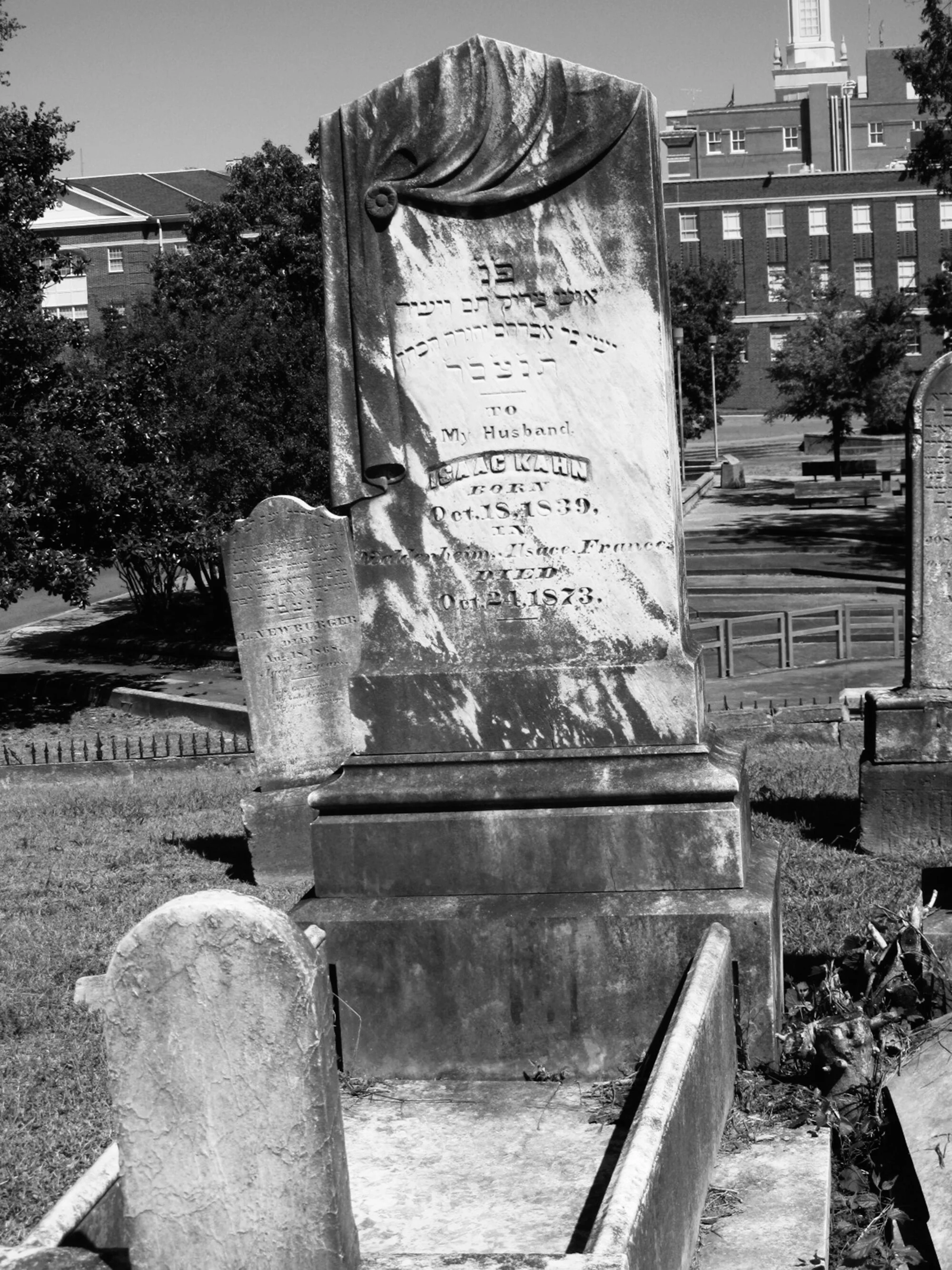
Isaac Kahn
One of the most prominent victims of the 1873 Yellow Fever epidemic in Shreveport, Isaac Kahn migrated to the United States from his native Alsace, France as a young man, initially settling in Atlanta, Georgia with his brothers Raphael and Julius. Like most young men, he answered the call to Confederate service when war broke out in 1861, and Kahn served with distinction. He was a member of the “Sumter Rifles” of the 24th Louisiana Infantry Regiment, entering service as a private, and discharged in 1865 after having reached the rank of sergeant. He had the further distinction of having survived being taken prisoner of war.
In his brief life following the conclusion of the war, Kahn was distinguishing himself as a successful general merchandiser in Shreveport, with an enterprise known as Kahn and Brothers. He and his wife Fannie had two sons who would grow up to also contribute to the ongoing civic life of Shreveport; son Leon was a city councilman and son Arthur became president of Shreveport National Bank. In 1873, when Shreveport was besieged by a particularly virulent Yellow Fever epidemic, tragedy struck the Kahn family multiple times. Isaac’s brother Julius died of the disease on September 11, just a week later, Isaac’s son Bernard Benjamin (“Bennie”), aged six years, was also among the victims. Isaac Kahn fell ill just a few weeks following, and succumbed to Yellow Fever on October 24. All three are buried in the Hebrew Rest section of Oakland Cemetery, but Isaac’s marker alone bears the most obvious indicator of the family’s grief. It is distinguished by a large drape, signifying mourning, and covers the entire top of the monument, also perhaps hinting at the thin veil between this life and the next. It is a poignant reminder that Yellow Fever exacted a particularly harsh price from this Shreveport family.
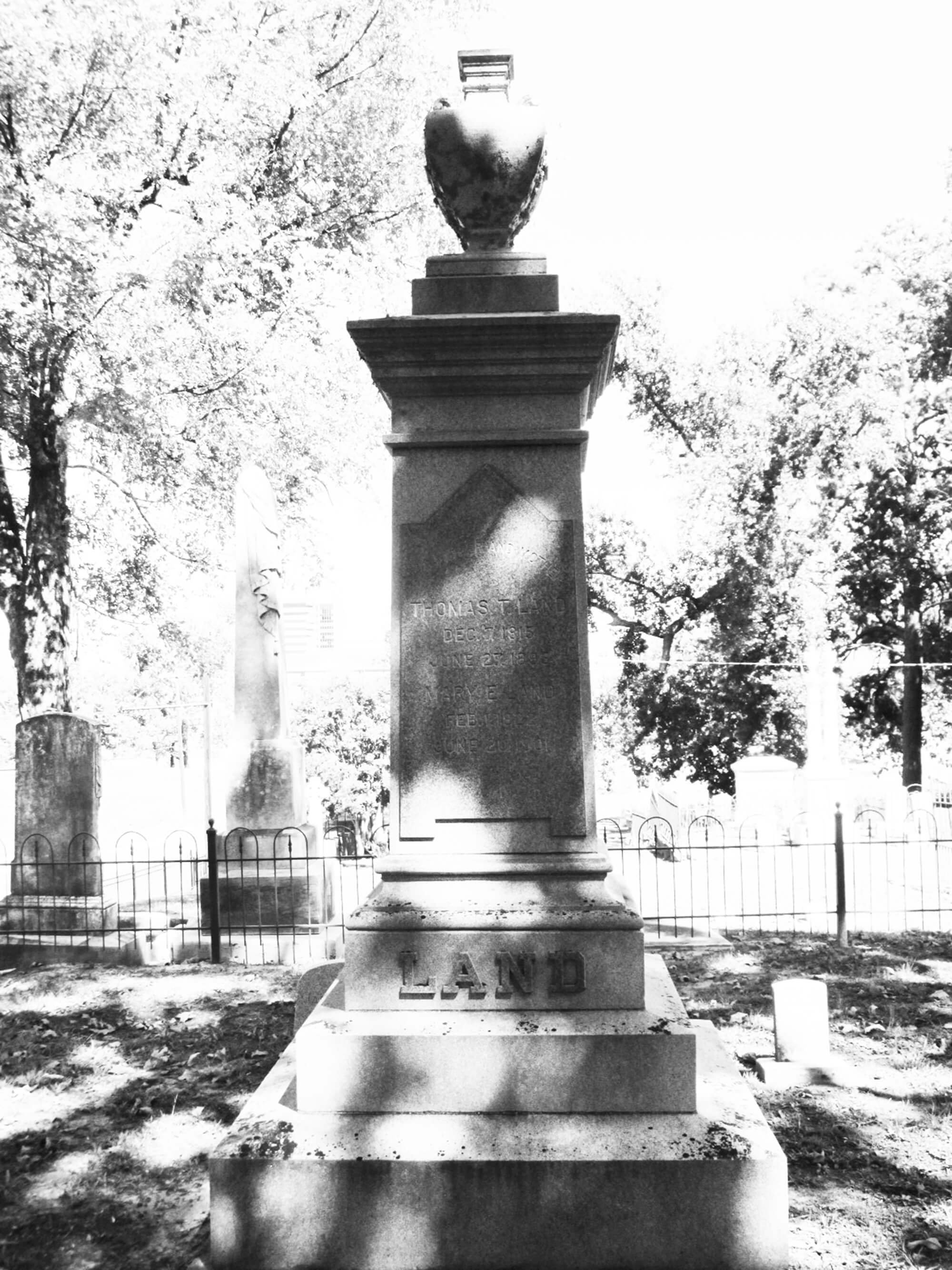
Thomas Thompson Land
A prominent figure in the legal field of both the city and the state of Louisiana, Thomas Thompson Land was born in Tennessee in 1815 and studied law at the University of Virginia. Prior to coming to Shreveport in 1846, Land served in the Mississippi legislature for four years before moving west to Texas (while it was still an independent republic). He settled in Shreveport in 1846 and established a law practice. In 1854, he became district judge for the combined jurisdictions of Caddo, Bossier, and Desoto parishes; by 1858 he was elected to be a justice of the Louisiana State Supreme Court and the Land family moved to New Orleans. After Union forces occupied New Orleans in 1862, the Lands took refuge in Shreveport, and he technically remained on the court until 1865, when he returned to Shreveport permanently and resumed a private practice of law. He served the citizen of the city in that capacity until the politics of the Reconstruction era were over in the South and it was time to reconstitute state government.
When the Louisiana Constitutional Convention met in 1879, Land was a delegate representing Caddo Parish. This was the convention that met to return Louisiana to the status of “home rule” with a new state constitution following Reconstruction. Technically speaking, this constitution was supposed to bring out major changes for Louisiana following the guidelines of Reconstruction, including the creation of a free public education system and an article that clearly stated there would be no restrictions on suffrage “based on race, color, or previous condition of servitude.” However, elsewhere in the articles there were signals of an intent to maintain the pre-Civil War status quo, including the institution of a poll tax which was to fund free public education, but of course became notorious for its use in disenfranchising former slaves. This constitution also continued and expanded the corrupt Louisiana Lottery system. Amid this complex time in state history, it is a testimony to Land’s reputation that he was appointed to serve as the chairman of the prestigious judiciary committee of the convention, which oversaw the establishment and ordering of the Louisiana justice system under the new constitution.
Land married Mary Eliza Dillingham of Mississippi in 1839, and the couple had fourteen children together. The Land family plot at Oakland Cemetery is the final resting place for Justice Thomas Thompson Land, who died in 1893, as well as Mary, who died in 1901. Also buried within are seven of the Land children. The plot is one of the most picturesque spots in Oakland, surrounded by beautiful black iron fencing.
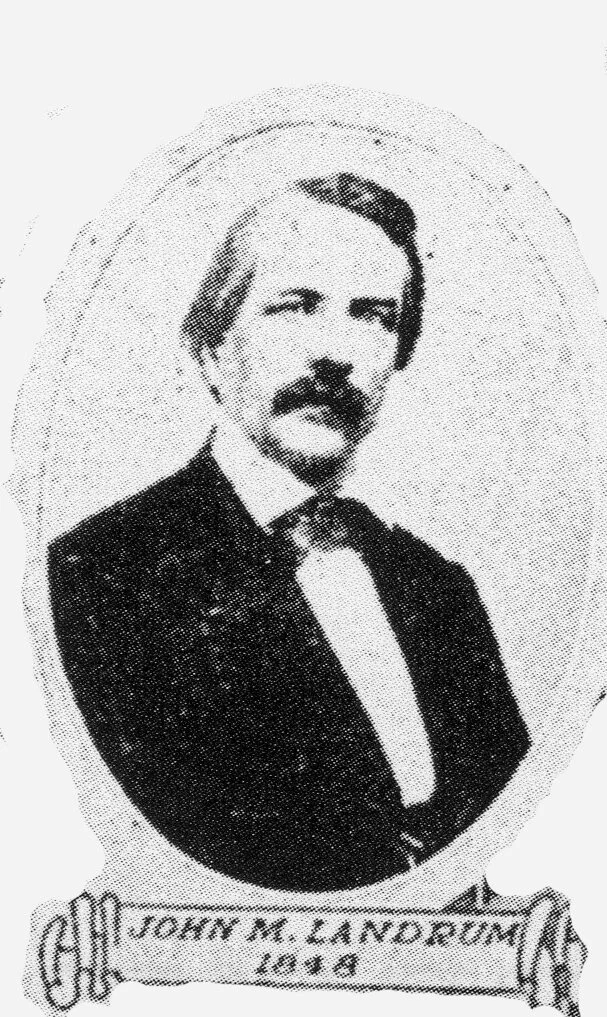
John Morgan Landrum
John Landrum was mayor of Shreveport in 1848, and was actually one of the first mayors of Shreveport to oversee the city’s ownership of the newly acquired Oakland Cemetery. Landrum’s immediate predecessor, Robert Nathaniel Wood, was mayor at the time the property for Oakland was set aside as the city burial grounds, and the efforts to retain the land began with Wood’s predecessor, Lawrence Pike Crain. Landrum also played an important role in the creation of the Louisiana Lake and Bayou Navigation Company in 1854, serving as the first secretary of the company. The purpose of this enterprise was “to construct a navigable passage for steamers and other boats around the Red River Raft and keep it free from obstructions.” The United States government was inconsistent in its commitment to maintain river navigability following its initial clearance by Captain Henry Miller Shreve, so private companies emerged with the stated objectives of helping to improve navigation and encourage more trade through the region. Therefore, Landrum’s role in the early history of Shreveport was pivotal, since the survival of the city was dependent upon the success of making and keeping the waterway open to commerce.
Landrum was a native of South Carolina and a graduate of University of South Carolina, where he pursued classical studies and law. He was admitted to the bar in Louisiana in 1844, and practiced intermittently throughout his political career, first as mayor and then in national office. Landrum’s success in city government, along with his personal record of achievement and reputation led to his election as a United States Representative in 1859 for Louisiana’s Fourth Congressional District. Landrum was an example of a Southern Democrat on the eve of Civil War; his understanding of state sovereignty convinced him that secession was the only viable political alternative for Louisiana amidst brewing sectional tensions following the election of Abraham Lincoln in 1860. This put him squarely at the intersection of history, as Landrum was one of the southern delegation that left the floor of the House of Representatives in January 1861 when Louisiana joined the ranks of other seceded southern states. Landrum’s death in October 1861 meant that he did not see the conclusion of the historic events that unfolded while he was in Washington or in the years immediately following. His monument in Oakland Cemetery is a large obelisk-shaped stone, noting he was “aged about 42 years” at the time of his death.
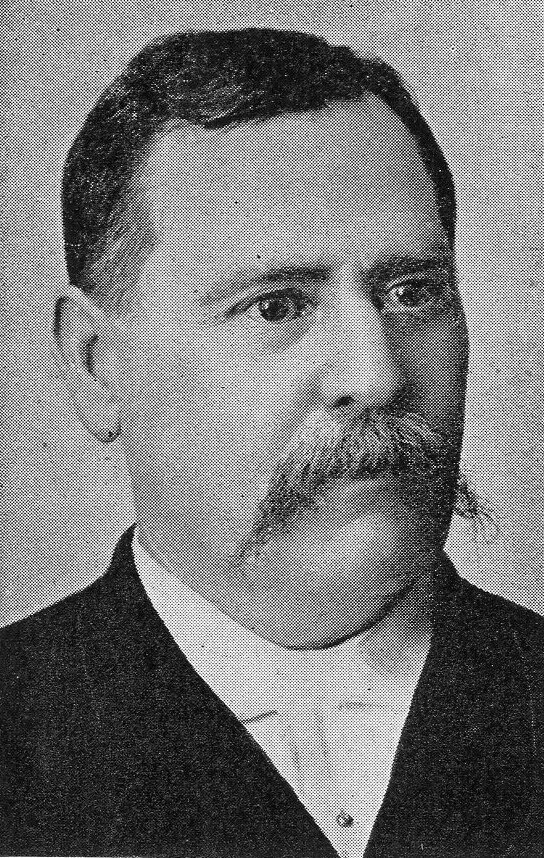
Albert Harris Leonard
The son of a steamboat captain on the Red River, Albert Leonard was just a boy of ten when his family moved to Shreveport from Columbus, Georgia. Born in 1839, he was a true eyewitness to Shreveport’s early identity as a river port and its defining moments during the Civil War, and his memoirs reflect his descriptions of a typical frontier town, complete with gunfights, dice games, and nefarious characters. His unique vantage point makes him an important and rich source of early city history.
With no formal education to speak of, Leonard nevertheless prepared himself for the study of law and was admitted to the bar at the young age of nineteen. However, when Civil War broke out in 1861, Leonard volunteered enlisted for service in the Confederate army (1st Louisiana Infantry) before battle wounds in June 1862 resulted in a change of duties and eventual honorable discharge from service. He began practicing law in Shreveport in 1866 and soon thereafter was elected to the post of Clerk for the District Court in Caddo Parish, before entering private practice with Capt. L.M. Nutt. Elected office continued to hold appeal to him, and he became a Louisiana state senator from 1872-76. In 1877 he became the U.S. Attorney for Louisiana and served in that capacity for twenty years before returning to the quieter life of private law practice. His final partnership was with E.H. Randolph and Allen Rendall.
His domestic life included marriage to Lucy Howell in 1879, and the couple had one daughter, Cecelia Leonard Ellerbe. In addition to a life in law and politics, Leonard was also a successful farmer. He owned large amounts of acreage covering several Red River plantations and was an important figure in the early development of lands along for the river for agricultural production. He was also one of the founders of the Shreveport Times, established in 1871, and is reported to have been responsible for bringing the first natural gas to Shreveport for use as a source of energy. His imprint on the city is obvious even as it has expanded far from its boundaries of his own age; indeed, Leonard Road in southeast Shreveport was named in his honor.
His wife Lucy died as a young woman of 27 in 1886, leaving Albert to care for the young Cecelia, aged 6 years. Cecelia grew up to marry Clarence Ellerbe (for whom another street in southeast Shreveport is named), and she became a widely published poet in addition to being one of the original founders of the Women’s Department Club. Cecelia was also instrumental in the early organizational structure of the Shreveport Little Theatre, which is now one of the oldest continuously operating community theatres in the United States. Albert Leonard lived until 1917. He is buried next to his wife Lucy in Oakland Cemetery, with a relatively simple monument marking their plot. Cecelia Leonard Ellerbe is buried in Shreveport’s Greenwood Cemetery.
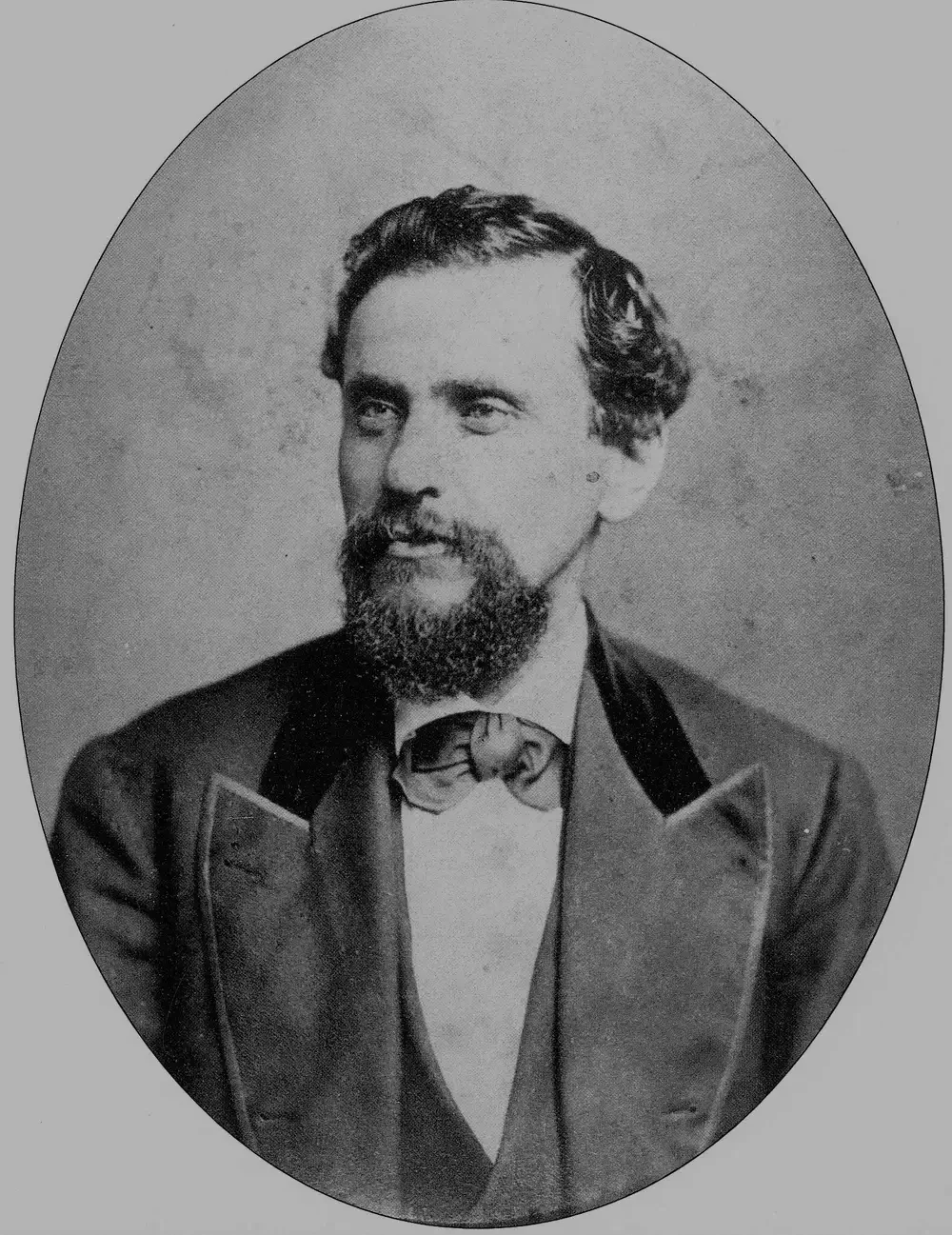
Captain Simon Levy, Jr.
Capt. Simon Levy, Jr. came from Alsace, France to Louisiana on the eve of the Civil War in 1855 and entered in to the mercantile business in Shreveport with his brother, Samuel Levy (profiled separately herein). When war broke out, Simon enlisted in the Confederate army, and rose to the rank of Captain in the First Louisiana Special Battalion. Following the war, Levy married Harriette Bodenheimer, the daughter of Jacob Bodenheimer, who had been among the area’s first Jewish settlers. In the 1870s, he owned a grocery store and a saloon with his brother-in-law, Lazarus Bodenheimer. Capt. Levy was instrumental in helping to bond the early Jewish community of Shreveport, serving as president of B’nai Zion Temple from 1879 to 1881. He also owned and operated The Banking House, which was the forerunner of Commercial National Bank. Levy became that bank’s first president, and CNB would enjoy a long history of success in Shreveport. He was also vice-president of Kansas City Southern Railroad, and was an important advocate for its coming to Shreveport.
The state of the railways in the area following the Civil War was understandably poor, and since much of the construction underway across the South connecting major cities had been ceased when war broke out. Much of what rail remained had been damaged. By 1897, Kansas City Southern had over 500 miles of new track from Shreveport to St. Louis, and another major port on the Mississippi River was connected to Shreveport by rail. Levy was instrumental in encouraging and promoting this economic development. The impact of the Levy brothers cannot be understated in helping to shape the economy of the area in the late nineteenth century, and Capt. Levy’s own business enterprises were great successes. He was a generous philanthropist and social activist, helping to establish the Louisiana Charity Hospital System, and serving on that institution’s first board of governors in 1876.
When the Levy brothers arrived in Shreveport in the 1850s, the Jewish community was quite small in number. By 1861, the community adopted the name Har-el and met in local homes. By the end of the Civil War, the Jewish community became known as Hebrew Zion, and began construction on their first house of worship on Fannin Street. Shortly thereafter, there was a split in the congregation over rival traditions of Judaism, but by 1877, the two Jewish groups had reconciled as part of the Reformed tradition. Levy did not live to see that congregation swell to outgrow its Fannin Street location, precipitating the construction of a new B’nai Zion temple at the corner of Common and Cotton Streets, but he was clearly influential in the years of its most rapid growth.
Simon and Harriette Levy had no children, and theirs is a bizarre burial story at Oakland Cemetery. Harriette died in 1878 and Simon in 1898, but Harriette is actually buried atop her husband’s grave. There was limited space in the Hebrew Rest portion of Oakland Cemetery, so she was exhumed to permit the burial of her husband, then she was reinterred atop him. Their plot in Hebrew Rest is therefore one of the most interesting in all of Oakland Cemetery.
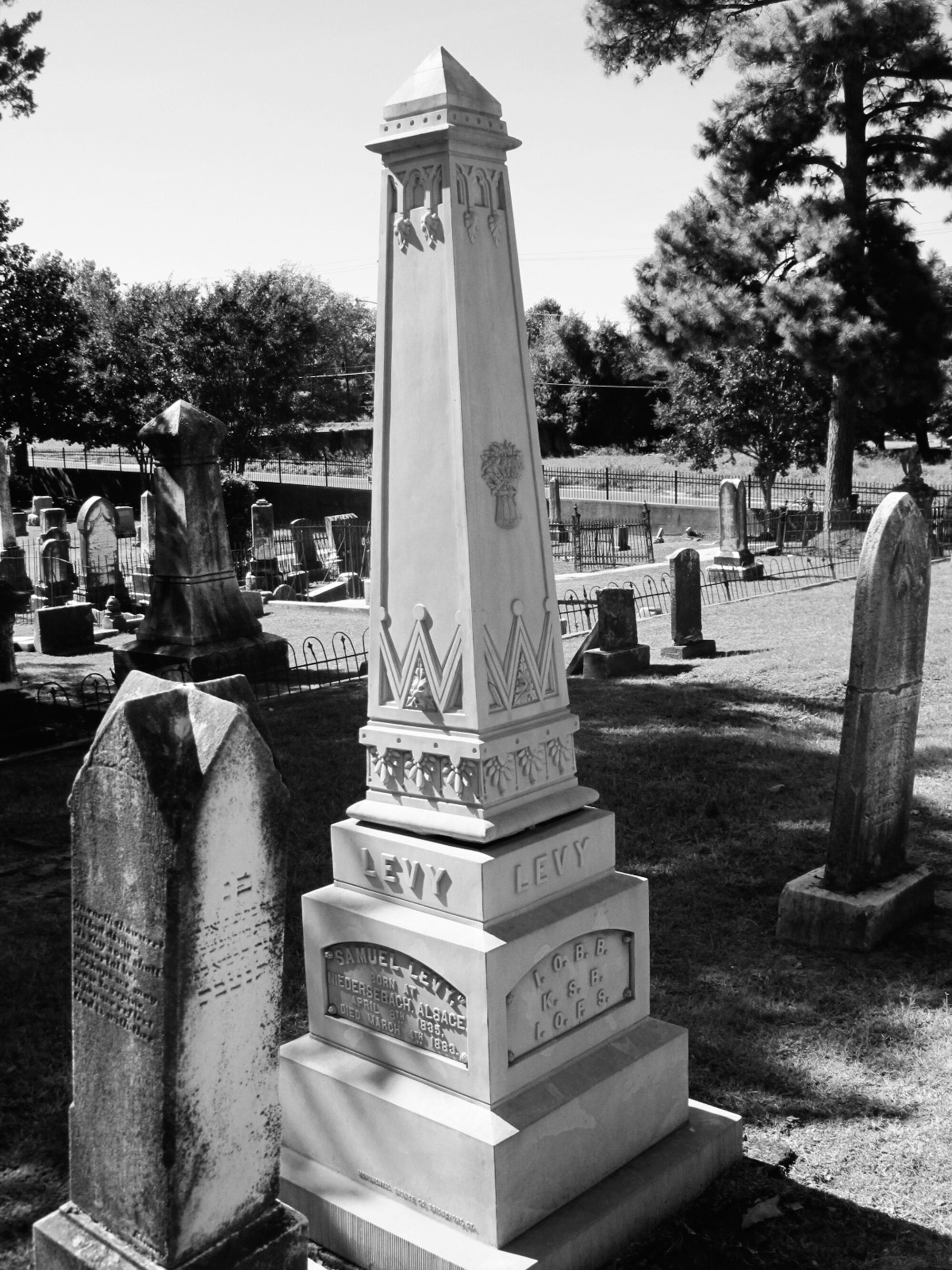
Samuel Levy
The rise of Samuel Levy to prominence in Shreveport could hardly have had worse historical timing. As the first of Shreveport’s four Jewish mayors, his life in public service was unfortunately intersected by the politics of the Reconstruction era and the Yellow Fever epidemic of 1873. Immediately following the Civil War, Levy served the city in its finance department. The Reconstruction governor of Louisiana from 1873 - 1877, the former Republican U.S. Senator William Pitt Kellogg, appointed Dr. Joseph Taylor to the office of Shreveport mayor, and Levy continued to function within the city administration. However, by 1873, allegations of corruption within the Taylor government, resulting in the diversion of city funds for the personal benefit of Taylor and close associates, provoked the public to demand Taylor’s resignation. He did so in August of 1873, and Levy suddenly found himself as mayor until such time as the next election could be held later that same year.
It could not have been a more challenging time for the city to find its coffers empty. Yellow Fever struck Shreveport in the fall of 1873, and within a brief period of weeks, the city lost one-fourth of its population to the illness. With an economic crisis gripping the city due to Taylor’s malfeasance and the great need for funds to combat the epidemic, Levy simply used his personal funds to pay the city’s operating expenses. It was a measure that was not only extraordinary, but quite unprecedented. His tenure as mayor may have been brief, but his contributions to Shreveport during a time of significant challenge was remarkable.
Born in 1835 in Alsace, France, Levy came to the area at time when many Jewish immigrants were settling in Shreveport, and he served in the Confederate army. Among Samuel’s siblings, his brother Capt. Simon Levy also forged a successful life in Shreveport, as one of the founders of the Kansas City Southern railroad and Commercial National Bank. Samuel Levy married a young widow named Louisa Stagleman, and the couple had seven children. Daughter Julia Levy died in 1881 at the age of 15 years, and son Moses Levy died in infancy in 1869, so those children are buried near their parents in the Hebrew Rest section of Oakland Cemetery. Louisa’s grave is unmarked, but Samuel Levy’s monument reflects an active life of community service. Levy belonged to several fraternal orders, including the Independent Order of B’nai B’rith and the Independent Order of the Free Sons of Judah.
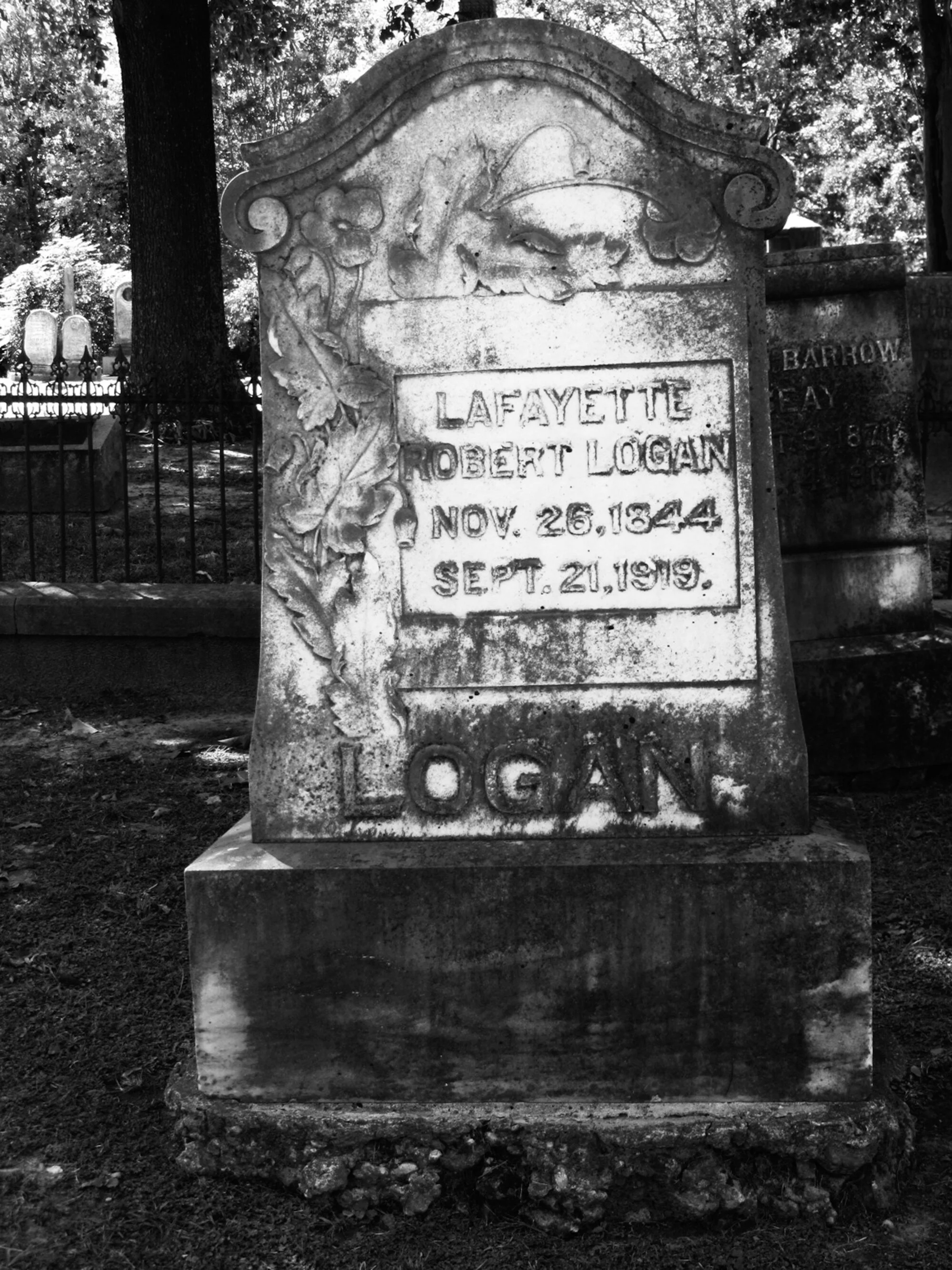
Lafayette Robert Logan
A Confederate Colonel from Virginia, Lafayette Robert Logan originally came to know this area because of his travels as a soldier, and he settled in Marshall, Texas after the Civil War concluded. There he was a partner in a hardware store named Logan and Whaley, until he moved to Shreveport in 1892. Logan opened an ice house and began brewing beer, establishing the Shreveport Ice and Brewing Company. In addition, Caddo Brewery, which Logan managed, became a subsidiary of Anheuser-Busch, brewing Caddo Beer and Budweiser, as well as a medicinal brand known as Shreveport Select Beer. This would prove to be the business where Logan made a considerable fortune. However, the parish of Caddo passed an ordinance in 1908 that made it illegal to manufacture, sell, or consume alcoholic beverages. Since this ordinance was not repealed until the United States rejected Prohibition nearly a quarter of a century later, it is likely that has a negative impact on Logan’s finances. He continued to distribute ice, however, which was an important commodity in the days before electric refrigeration.
Logan was a prominent citizen of Shreveport, and gave generously of his time to local civic pursuits, including organizations such as the Elks’ Club. His chief contribution to the city might have been the legacy of his home, however. His wife, Lavinia (“Livvy”) Seay Logan, inherited a plot of land on Christian Street in Shreveport, originally owned by her father, Judge William Austin Seay, and the couple began construction on what would become one of the city’s most recognizable Queen Anne-Victorian style mansions, which still stands today.
The Logan Mansion was designed by noted architect Nathaniel Sykes Allen, and the cost of construction was approximately $15,000 – notably opulent in an age when home construction averaged $2,000. Upon Logan’s death in 1919, the home passed to Wade Hampton, an executive with Kansas City Southern railway, and it remained in the Hampton family until 1955. The mansion has been home to churches and radio stations, but today is owned by a local Shreveport couple, Billy and Vicki LeBrun, who have restored Logan’s home to its original Gilded-Age splendor.
Lafayette Robert Logan is buried at Oakland Cemetery near his wife, Livvy, and his in-laws the Seays. From his grave can be seen the towering roofline of the magnificent home he built in 1897.
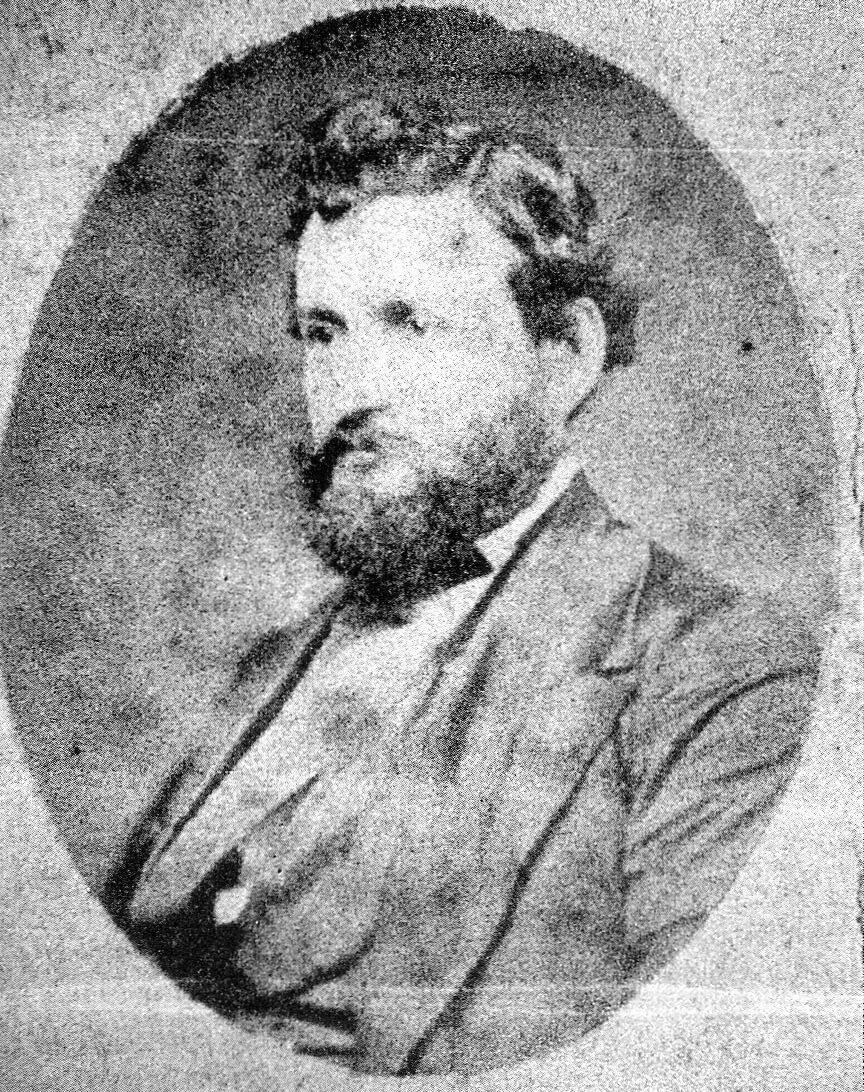
Colonel Leon Dawson Marks
A native of Bayou Sara, Louisiana, Leon Marks was a veteran of the Mexican War when he moved to Shreveport in the 1850s to open up a law practice. In 1859, he married Amelia Jordan, who was a relative by marriage of the future Union General and President Ulysses S. Grant. Marks also tried a career in journalism for a brief period of time, even publishing a weekly newspaper called the Caddo News.
When sectional tensions in the United States began to build on the eve of the Civil War, Marks became one of the delegates to the Louisiana convention to decide the issue of secession from the federal union. Marks was present following the vote counting on January 26, 1861 when the convention announced to the world that, “the connection between the state of Louisiana and the Federal Union is dissolved; it is a free, sovereign, and independent power.” In the immediate aftermath, it was Marks who helped form the first infantry company (Company H) in Shreveport that would serve as part of the First Louisiana Infantry for the Confederate army. His last assignment was to the 27th Louisiana Infantry, which was fatefully dispatched to Vicksburg, Tennessee just before the Union siege of that key Mississippi River fortress began. In the 27th Louisiana, Marks was promoted quickly through the officer ranks to Colonel and was instrumental in overseeing the engineering design and construction of river defenses for Vicksburg. His promotion is noted in independent correspondence from Vicksburg and it is clear that the men of his company admired and respected him.
On June 28, 1863, a Union bomb exploded in mid-air over Colonel Marks as he sat quietly eating a meal. He suffered a serious head injury in the blast and his family made arrangements to transport him back to Shreveport in hopes of a recovery. However, his condition continued to deteriorate after returning to Shreveport and he died on September 23. Although Marks was Jewish and had ties with the Jewish community of Shreveport, he is not buried in the Hebrew Rest section of Oakland Cemetery. His funeral was conducted with full military honors.
A tragic ending also awaited Marks’ widow Amelia and their son, Francis. In 1869, they were aboard the steamboat Mittie Stephens when it sank in Caddo Lake. They both rest next to Colonel Marks in Oakland.
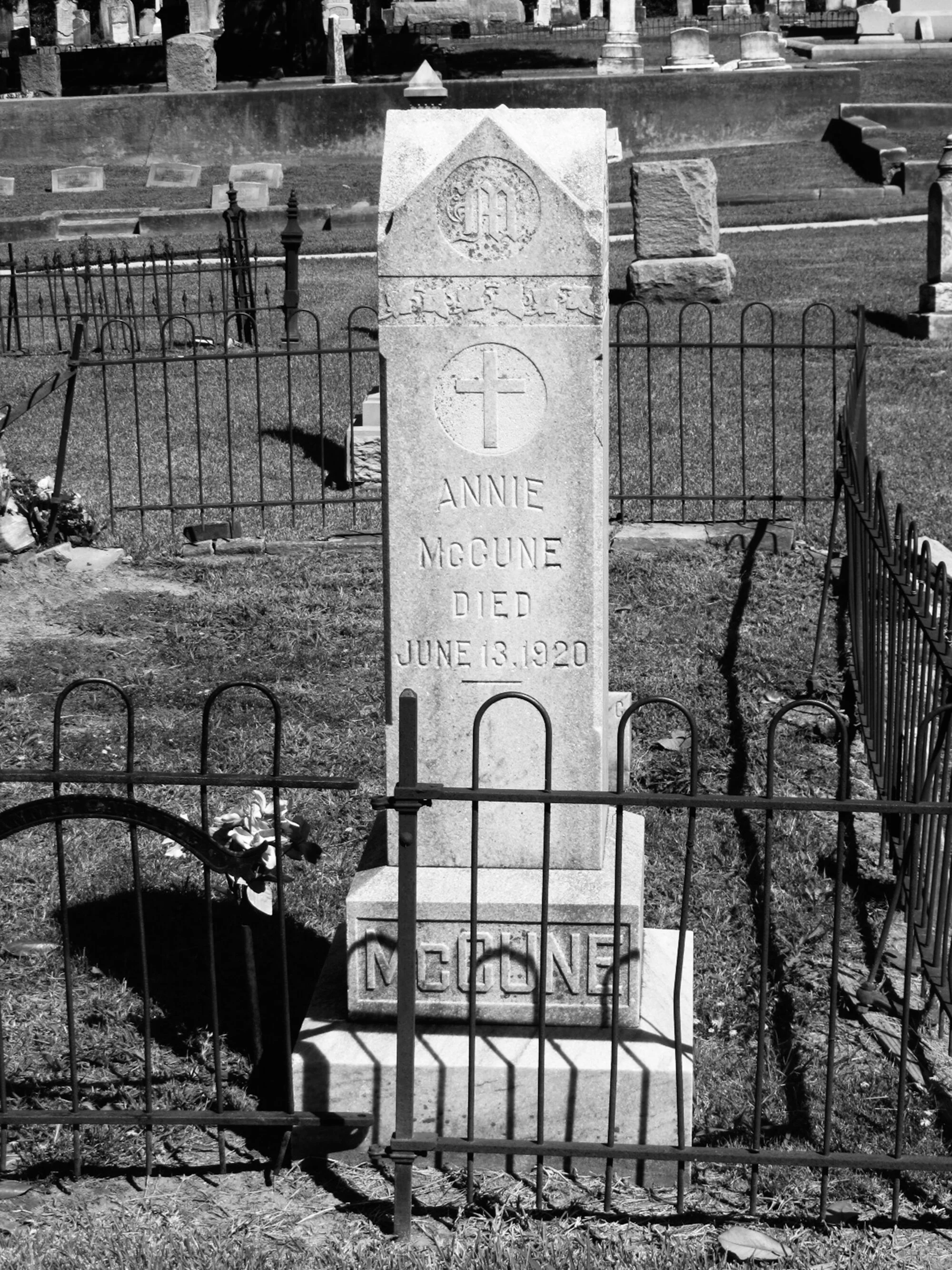
Annie McCune
Shreveport was home to a legal “red light district” from 1903 to 1917, although prostitution certainly existed in the city from the time the first settlers came in the early nineteenth century. As a river city, Shreveport naturally attracted travelers and merchants, and even before the creation of a segregated red light district, prostitution thrived on the riverfront of Shreveport in an area known as “the Batture,” (or “river bed”) located near the docks. In 1903, the Shreveport City Council established a legal district for prostitution in an area of the city known as St. Paul’s Bottoms.
One woman especially emerged as the prototypical businesswoman of the era’s illicit culture. Annie McCune has an iconic place in Shreveport history, known as simply “the Madam,” and “the Queen of St. Paul’s Bottoms.” Although not much is known of her early years, McCune came to Shreveport during the Civil War, perhaps with Union troops up the Red River from New Orleans following the occupation of that city. Born in Ireland in 1840, her family may have been among the large numbers of Irish immigrants who sought refuge in America during the potato famines of the mid-nineteenth century. She may have resorted to prostitution as a means of survival.
Historical records of Annie McCune’s influence in Shreveport are somewhat scarce. A biographical framework within city history can be constructed from building deeds and other public records, but much of her personal life and story is unknown. Her first address within the city was listed on Common Street in downtown and at least one brush with the law was recorded early on, when in the 1870s she was arrested and fined for “streetwalking.” Through legend and popularized myth surrounding her there emerges an image of a kind but pragmatic businesswoman who cared for her women and her community. A persistent legend continues to posit that Annie McCune opened her house of ill-repute as a hospital to victims of the city’s Yellow Fever epidemic, and that she herself nursed the ill and dying. The 1900 United States Census lists her as the head of her household, with an occupation as a “hotel keeper.” Living with her at the time were two young female “boarders” with occupations listed as “seamstress” and “dressmaker.”
No longer in existence today, McCune’s home was located on Cane Street (today known as Baker Street), facing the 900 block of Fannin Street near the edge of the district. It is unfortunate that due to the clandestine nature of the district and the very private lives of the women who populated those streets and buildings, historians lack detail. Annie McCune remains the most intriguing historical figure of this chapter of Shreveport history, yet much about her remains a mystery. There are no surviving portraits of her known to exist and details of her private life are drawn from only a few public records. McCune married B.C. Secord in 1901, but then filed for divorce a year later when Secord abandoned her and left her with a diamond engagement ring that was yet to be paid for. In her plot at Oakland Cemetery there is the grave of a five-year old child named Ada Mary Carlile, born November 16, 1895, died April 12, 1900. The date makes it unlikely this was Annie’s child; it may have been the child of a prostitute she employed. Annie was known to be generous of heart as well as a successful businesswoman. She died in 1920 from complications of diabetes and her grave at Oakland is one of the most oft-visited. Periodically, someone still leaves fresh flowers there in memoriam.
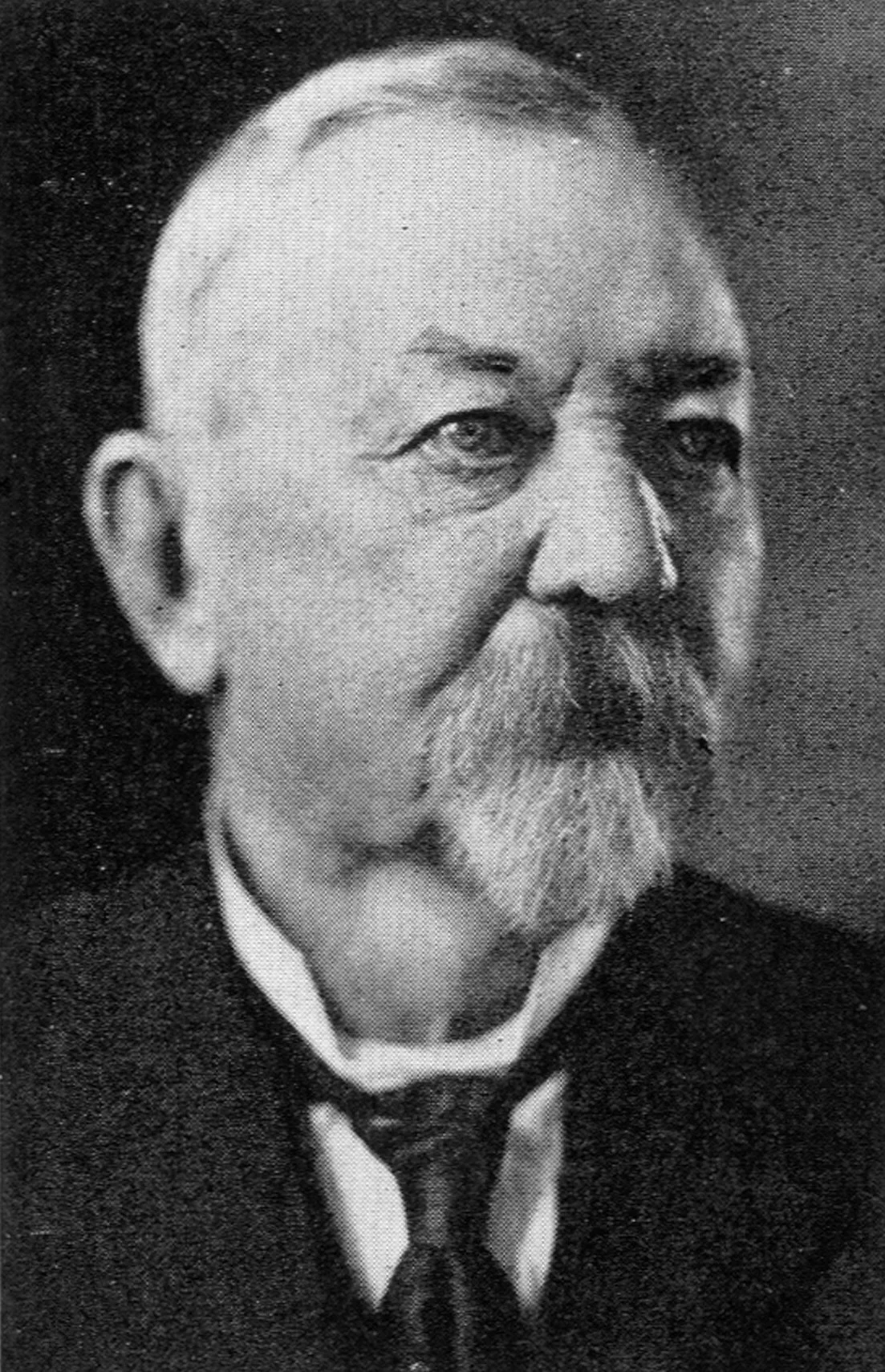
Reuben Neil McKellar
Known affectionately as “Uncle Rube” to the citizens of Shreveport, this city councilman, mayor, commissioner, and community servant deserves the credit he has historically received for literally lifting the city out of the mud. Serving on the city council before being elected mayor in 1896 and later Commissioner of Streets and Parks in 1922, McKellar was responsible for an ambitious and aggressive paving program for city streets, in addition to other important public works improvements. His contributions to city infrastructure, so vital to continued growth at the turn of the twentieth century, were quite significant.
McKellar was born in Kickapoo, Texas and came to Shreveport as a teenager. His father was a cotton broker, and built a business in Shreveport that McKellar continued after his father’s death, even serving as president of the local cotton exchange in the 1880s. He married Theo Hamilton and the couple had three children, Edwin, Mary Belle, and infant Hamilton McKellar, who died at one month of age. Their infant child is also buried in Oakland, memorialized with a marker that says, “Tiny Hamilton McKellar.” The family made their home in an impressive Victorian structure on Oakland Street which still stands, but is today an unoccupied and endangered historic site. His reputation as an advocate of public works improvements actually began while he served as a Shreveport judge, and he was known to sentence offenders routinely with a fine of “$7.50 or 1,000 bricks.” McKellar thought the fine of $7.50 sufficient for most misdemeanor offenses, and those offenders unable to pay were sentenced to lay one thousand bricks on downtown streets. The impact that this modernization had on transport and commerce cannot be understated.
Beginning with the first brick laid on Milam Street in January 1897, McKellar supervised the transformation of downtown from mud streets to the brick pavers that are the foundation of some of the downtown streets today. The work was extended to Texas Street and south to Jordan Street, with work completed by 1920. Therefore, in every sense of the word, McKellar was a true builder of Shreveport. His interest in city improvements also extended beyond elected public service. While mayor, he also supervised the first sewer completion on Texas Street and the building of Princess Park. However, after he left the mayor’s office, he continued to work in private construction to build sidewalks and pave alleys throughout downtown. McKellar is also responsible for the entrance gate to Fort Humbug, which still stands today.
Like many civic-minded men of the early twentieth century, McKellar served in several community and fraternal organizations. In addition to public office, he served as a director of the Commercial National Bank, and was a member of the fraternal order of the Knights Templar and the Shreveport Elks’ Club. Reuben McKellar died on May 12, 1933 and funeral services were held at his Oakland Street home. His final resting place is a family plot shared with wife Theo and “Tiny Hamilton,” but also with daughter Mary Belle, who lived in Shreveport until her death in 1941.