
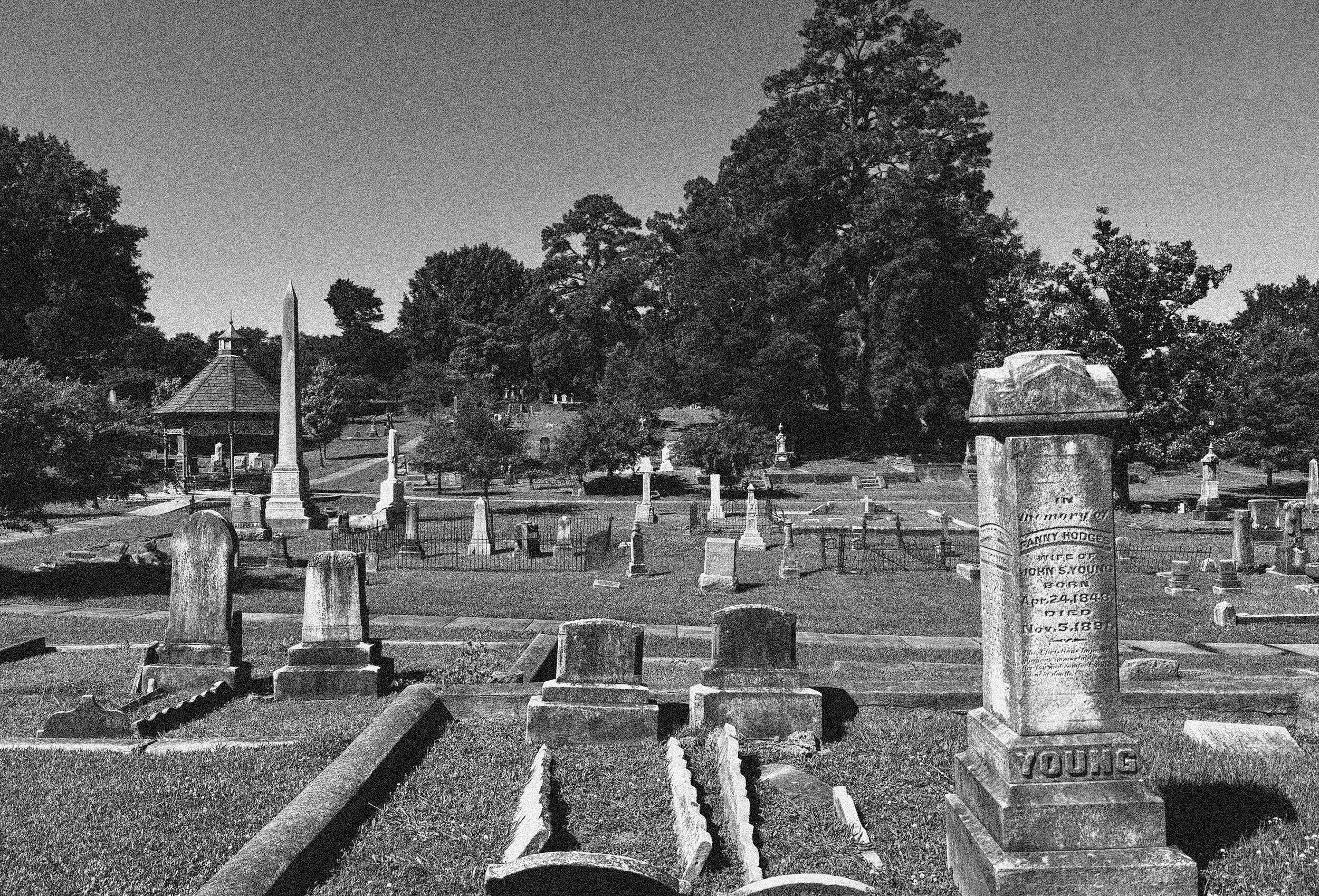
Noteworthy Residents N-Z
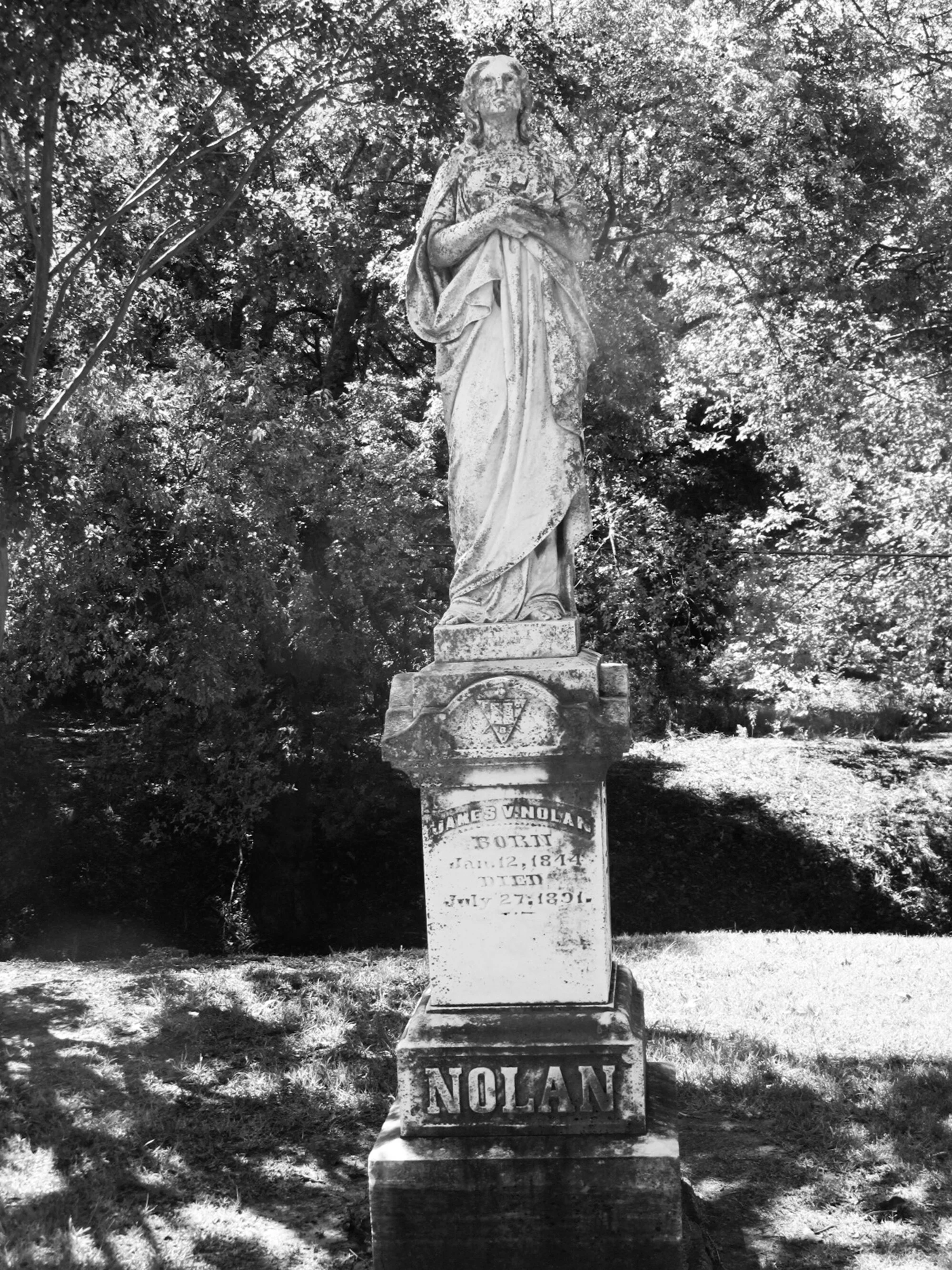
James V. Nolan
A native of New Orleans born January 1844, James V. Nolan matured into young adulthood just as the Civil War broke out. He entered the service of the Confederate States of America in 1862 at the age of 18 years, and he was attached to the 18th Louisiana Infantry division. He saw action at the Battle of the Mansfield during the Red River Campaign of 1864 as Union forces advanced toward Shreveport. Following his service there, Private Nolan was transferred to Meridian, Mississippi under General Richard Taylor, where he remained until the Confederate surrender in April 1865. Like many other men fortunate enough to have survived the war, Nolan simply returned to his home and resumed his civilian life.
His father, James P. Nolan, had been a successful merchant before the war broke out, and then served as a tax collector for the Confederate government in New Orleans until its occupation by Union forces in 1862. The New Orleans that Pvt. Nolan returned to after the war was bustling with renewed prosperity. He began working for the Southern Express Company? in 1865 and moved to Shreveport in 1867 as an expansion of that enterprise to the northern part of the state. In 1869 he married Jennie Bond, a native of England, and together they had three children. The family plot at Oakland is testimony to a stark reality in the nineteenth century – childhood mortality. There are found the graves of two of his children, both of whom died very young. Jimmie Nolan was stillborn in September 1871 and his sibling, Willie Nolan, died in 1876 at the age of four years. The monuments for the children are not only poignant but reflect typical iconography of the age. “Little Jimmie” and “Willie” are memorialized together at Oakland with a shared monument. Jimmie Nolan’s inscription reads, “our little man,” and beneath Willie Nolan’s name are clearly the words of grieving parents, “Jesus took them in his arms and blessed them.” (image)
James Nolan’s contributions to the social and civic life of the city are well-documented in local histories. Besides becoming secretary of the local Cotton Exchange, he also was a charter member and vice-president of the United Confederate Veterans Association. He was a prominent member of Shreveport society until his death in 1891. His monument in Oakland (image) honors his membership in the secret societies (fraternal orders) quite popular in the nineteenth century. He was a member of the Knights of Honor, established in 1873 and dedicated to the principle of charity, and the Knights of Pythias, an 1864 fraternal order dedicated to friendship, benevolence, and charity.
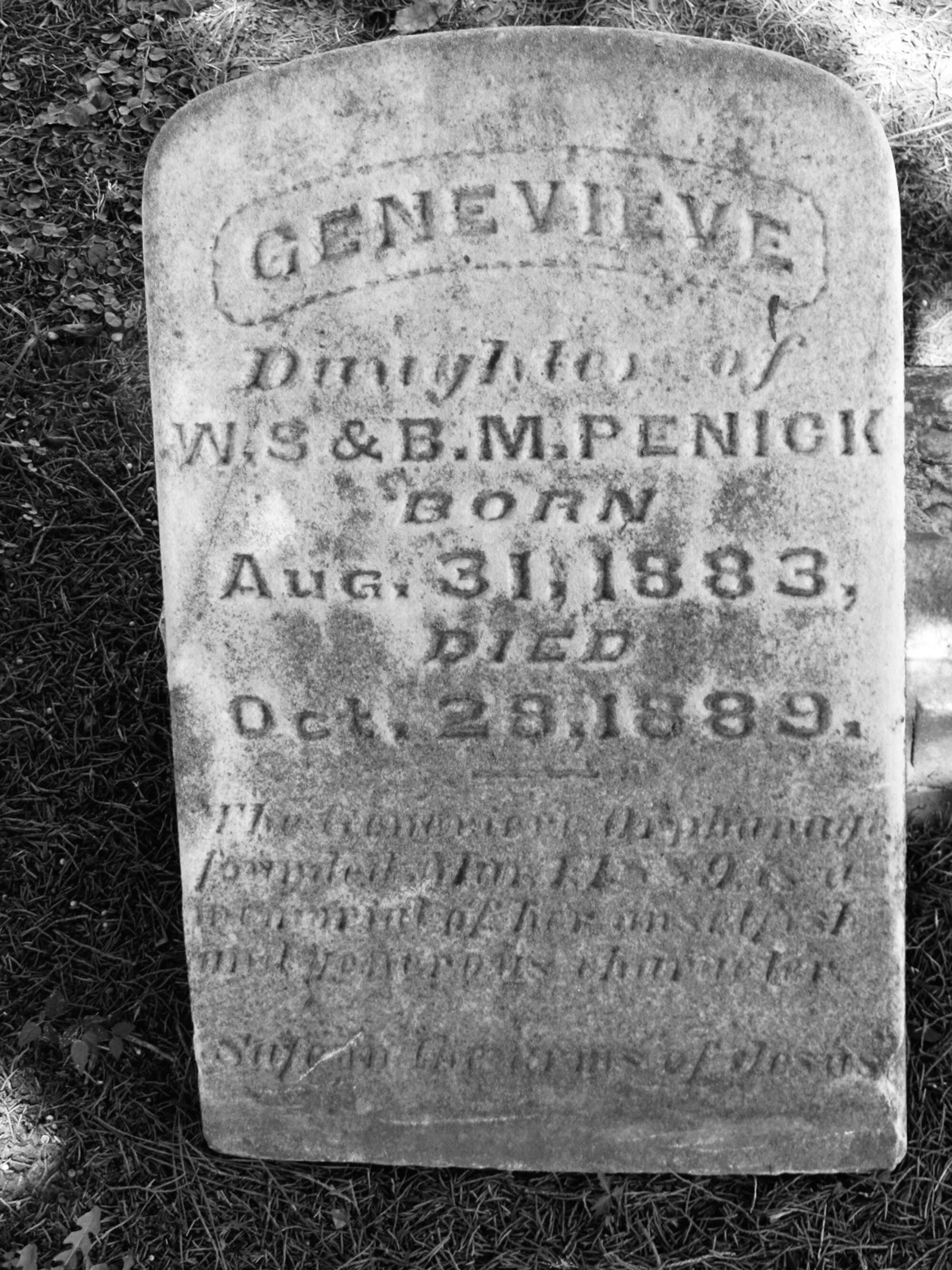
Genevieve Penick
The short life and tragic end of this little girl inspired a long-lasting institution that would honor the children of Shreveport in a quite remarkable way. Genevieve Penick, born in 1883, was the daughter of William and Bettie Penick of Shreveport. William Penick was the pastor of First Baptist Church. Just six years old at the time of her death, Genevieve choked to death on a glass eye that had been attached to a baby doll with which she had been playing.
Stricken with grief, her father decided to honor her brief life by establishing a permanent orphanage in her name to further honor efforts that were already underway. Tradition holds that just months before Genevieve’s death, Rev. Penick had been profoundly moved by the sight of a homeless child in the cold months of winter. An early chronicle of Shreveport quoted Rev. Penick as saying, “Sitting in my study one rainy night in February, I heard a gentle knocking and on opening the door, there stood a little girl with tangled hair, thinly clad and shivering with cold.” Immediately thereafter, he approached the wealthy widow of prominent Shreveporter Edward Jacobs, Palestine, to help with funding a home for such children. Palestine Jacobs agreed to help, and generously added her personal funding to the orphanage for nearly three decades. Penick then rented a home on Texas Avenue as a temporary location and the city’s first orphanage was established. Genevieve Penick enjoyed playing with the children at the orphanage and spent much time there herself, until her untimely death just a few months later.
The permanent structure that became Genevieve Orphanage stood on Olive Street, between Elizabeth and Warrington Streets, until 1962. The original structure that was dedicated in 1901 burned a few years later, so a second building was constructed in 1909. The idea of an orphanage as a response to the needs of homeless children was one that grew only gradually, as the city of Shreveport grew and attracted a larger population. With the swell of city growth at the turn of the twentieth century, temporary measures no longer sufficed. The Genevieve Orphanage was both a necessary Shreveport institution and a city landmark; its services rivalled that to be found in any city of comparable size or even larger. Social reforms of the mid-twentieth century brought new means of dealing with homeless children and orphans, through the development of state foster care and adoption systems. The old Genevieve Orphanage became the Family Counseling and Children’s Services Center. Many in Shreveport still refer to the site as “the Genevieve,” reflecting a fitting tribute to a child lost too young and her father’s efforts to respond to children in need.
The grave of tiny Genevieve Penick in Oakland Cemetery is appropriately inscribed with the words of a father who responded to an acute personal loss by giving to others, “The Genevieve Orphanage founded in 1889 is a memorial of her unselfish and generous character. Safe in the arms of Jesus.”
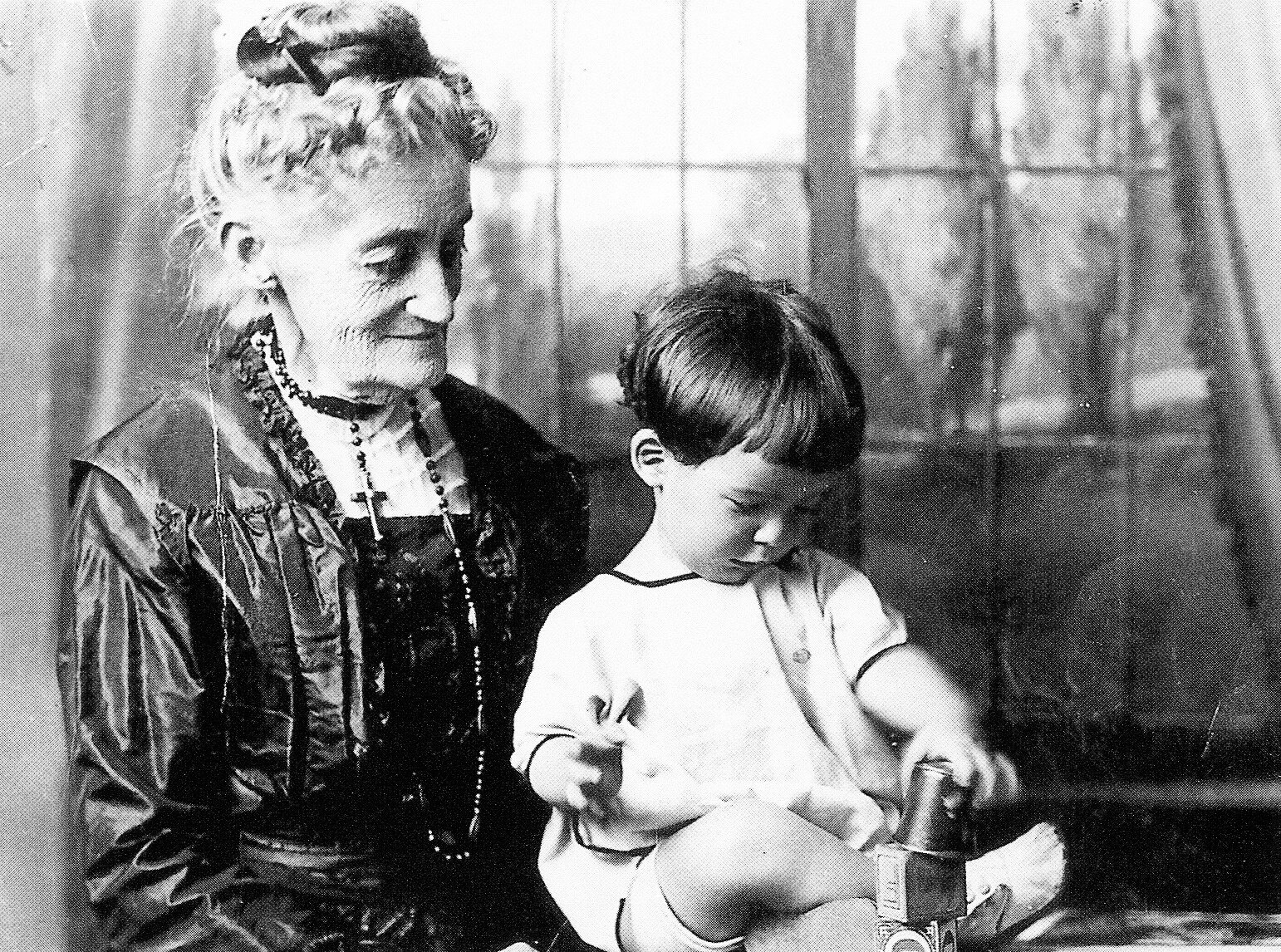
Julia Sparke Rule
As a woman who vigorously pursued a career as a writer for the Shreveport Times, Julia Sparke Rule was a true pioneer in a field that was almost exclusively restricted to men. She was, according to sources during her lifetime and shortly thereafter, the best known female writer in northern Louisiana at the time. Journalism in the nineteenth century was a man’s domain, even for what might be considered “soft” news. However, this Shreveport woman defied the stereotype and therefore stands out as a remarkable exception. Born in Louisville, Kentucky in 1851, Julia Sparke Rule belongs to an age that offered few career opportunities to women. Sadly, her life was marked by personal loss and tragedy, and she outlived both her husband and her son. She married Confederate war veteran Charles Rule, who died in 1881. The couple had one son, Glenn Rule, who died of a self-inflicted gunshot wound in 1911. Yet Julia continued to work energetically until her own death twenty years later. In addition to her dedication to writing, Julia was also a gifted painter and artist.
Beginning as a reporter for the Shreveport Caucasian and later for the Shreveport Times and Shreveport Journal, Rule covered a variety of news topics. Unfortunately, because the news standards of the day did not always produce bylines for articles, it is difficult to know much about which pieces she actually wrote. However, Rule was responsible for beginning the society page, and here she wrote under the pseudonym of “Miss Pansy.” Under this pen name, Rule offered advice on everything from current fashion to social trends, noting significant community events and those in attendance. She was part-gossip columnist, part-society editor, but quite popular and widely read.
Julia had many interests outside journalism. She was also an advocate of physical education for both boys and girls. She taught calisthenics at the Kate P. Nelson Seminary, at the time, a prominent school for girls. As the State Fair of Louisiana grew in Shreveport, Julia became its first public relations director. She had a remarkable singing voice. A devoted member of First Baptist Church in Shreveport, she was reported to be the first person to have sung the hymn “Sweet Bye and Bye” in Shreveport.
An often-repeated anecdote about Julia Rule is her distinction as the only woman to have been given the honor of driving a golden spike to mark the completion of a segment of railway. In July 1874, Shreveport mayor Andrew Currie was slated for the honor of celebrating and marking the completion of the Vicksburg-Shreveport railroad, but at the last minute, was unable to attend. Present at the festivities was reporter Julia Sparke Rule, who proudly completed the ceremonial task on the mayor’s behalf. (Can’t find a source for this family anecdote except for a goofy book I don’t want to use! Can we cite family? Newspaper?)
Julia (“Miss Pansy”) contributed articles for the local newspapers until just a few days before her death at age 79, on April 28, 1931. Her final resting place in Oakland Cemetery is notable for its simplicity; a minimal ground tablet marker that bears only her name and dates of birth and death.
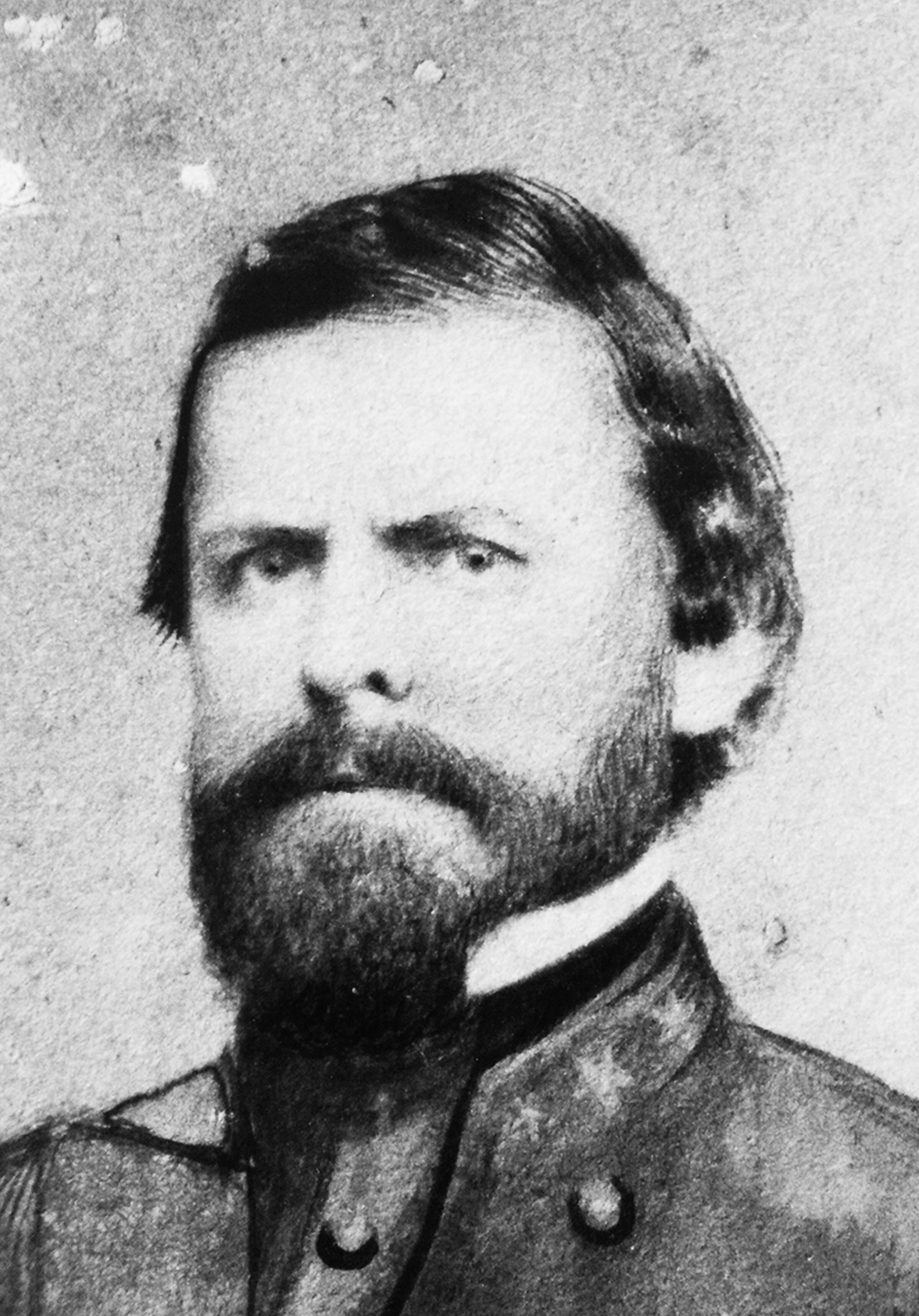
Colonel William Rabun Shivers (C.S.A.)
William Rabun Shivers entered the pages of Shreveport history at a colorful and interesting time, for it was a period that witnessed three rival claimants to the office of mayor following a disputed 1871 election. The previous occupant of the mayor’s office, Jerome Bonaparte Gilmore, decided to not seek re-election in 1871, leaving two candidates vying for the office –William Rabun Shivers and Moses Crowell. Shivers was a Georgia native who had served the Confederacy, reaching the rank of Colonel in the 1st Louisiana Infantry (a member of the volunteer “Caddo Rifles”). The Caddo Rifles were organized in Shreveport in 1861, and records show that the volunteer group received a stipend of $4,500.00 payable to William Shivers as Captain of the company. In addition to being a veteran, Shivers had also served on the Shreveport City Council from 1857-58.
Shivers was man of considerable repute in the area, fondly remembered for his war service and leadership, a man who was at least twice wounded in battle while a Confederate soldier. On the other hand, Crowell was a Virginia native who achieved the rank of Major in the United States army and was commander of a corps of Union troops dispatched to Louisiana as an occupation force. Given the Reconstruction politics that prevailed at the time, Crowell was therefore unpopular with some Shreveport citizens, but the election nevertheless proved to be close. The official vote count had Shivers winning by a count of 371 to 347.
However, the Louisiana State Legislature passed a bill during the summer of 1871 that permitted the governor to appoint city officials in lieu of elections. This was perhaps an attempt to cool tensions related to federal occupation during Reconstruction, but it meant near-chaos for the city. As it turns out, Governor Warmoth’s choice for Shreveport mayor was Moses Crowell, not the local favorite, William Shivers. The dilemma resulted in a lawsuit in the Tenth Judicial District Court to resolve the three-mayor dilemma, but before those proceedings could get underway, William Shivers died suddenly on July 3, 1871 at the age of 52. This effectively ended the legal challenge.
Shivers was married to Sallie Elizabeth Sarah Trabue of Missouri and they may have had one child, although the census records for the period do not list the family in Shreveport. Colonel Shivers rests in Oakland Cemetery beneath a worn marker that is barely legible today.
The Sterrett Family
Oakland Cemetery continues to hold on to many mysteries even today, including the location of the burial site of the Sterrett family, from the earliest days of Shreveport history and with some noteworthy genealogy. The city sextons who were responsible for the maintenance of Oakland kept what are now known to be sometimes unreliable records. However, a 1905 map of the cemetery archived in Shreve Memorial Library shows what was purported to be the location of the family plot for the Sterretts, near the present east side fence close to what is today the rear parking lot of First United Methodist Church.
The Sterretts are at the center of a few interesting tales. Little is known of Alexander Sterrett’s early years, but like many men of the early nineteenth century, he probably made his way westward to explore the promise of the frontier. He was the first Caddo Parish sheriff, coming to occupy that office as new parishes were created out of Natchitoches Parish in 1838. Sterrett had previously served as a Natchitoches deputy sheriff, had lived in Alexandria but knew the river and the Shreveport area well. Because of his knowledge of the area, his appointment to the post by Governor Edward White in January 1838 seemed quite logical. However, it was not without some controversy as there were persistent allegations of theft involving taxes that Sterrett had collected while working for Natchitoches Parish. Sterrett paid the missing tax funds, plus interest, when ordered to do so by the Seventh Judicial Court.
Having law enforcement duties in a frontier town would be perilous indeed, but it was in the routine exercise of his function as a local merchant that Sterrett met an untimely end. In August 1840, he entered the Texas Street store of Charles Sewall, in order to demand payment for a shipment that Sterrett had previously delivered to Sewall. An argument ensued over the terms of the shipment and payment, and Sewall shot Sterrett, mortally wounding him. The shooting took place after witnesses said that Sterrett threw a knife at Sewall, just barely missing the merchant.
Sewall was indicted for the murder of Sheriff Sterrett, but two attempts to convict him both ended in mistrials. Most of the witnesses to the shooting claimed it was a clear-cut case of self-defense. It is thought that Sterrett was buried at the old City Cemetery (at Fannin and McNeil Streets), and that he was later moved to Oakland Cemetery when a city ordinance of 1847 decreed that all bodies be relocated there.
Sterrett’s wife, Martha Bowie, was the sister of Jim Bowie, a noted Texas hero of the Alamo. They married in Ascension Parish, Louisiana in 1828 and the couple had four children. All of them appear on the United States Census in 1850, living with Martha, who apparently opened up a boarding house in Shreveport to help support the family following her husband’s murder. All are listed on the United States Census of 1850 as living in Martha’s household, and by 1860 the census shows that Martha was living with her married daughter, Mattie Gouch (Matilda). Martha Bowie Sterrett does not appear on the 1870 census, so she is presumed to have died within that decade. How many of the Sterrett family are buried in the unmarked plot at Oakland is yet another mystery surrounding this early Shreveport family.
Richard and Zachary Taylor
In the spring of 1863, Shreveport became the capital of Confederate Louisiana as the state government fled advancing Union troops that occupied New Orleans, Baton Rouge, and finally, Opelousas. As the gateway to Texas and a central point of commercial and economic impact, the city expected to be the next target of a Union assault. Preparations to defend the city began in earnest, focusing on the construction of batteries and fortifications along the river. The direct attack on Shreveport never came, for Confederate armies succeeded in stopping the Union advance at the Battles of Mansfield and Pleasant Hill in April 1864.
The Union army that moved north toward Shreveport was under the command of General Nathaniel Banks, who was supported by the naval forces of Admiral David Porter in what is termed the Red River Campaign. The Trans-Mississippi Department of the Confederacy moved to Shreveport in preparation for a battle for the city, under the command of General Edmund Kirby Smith.
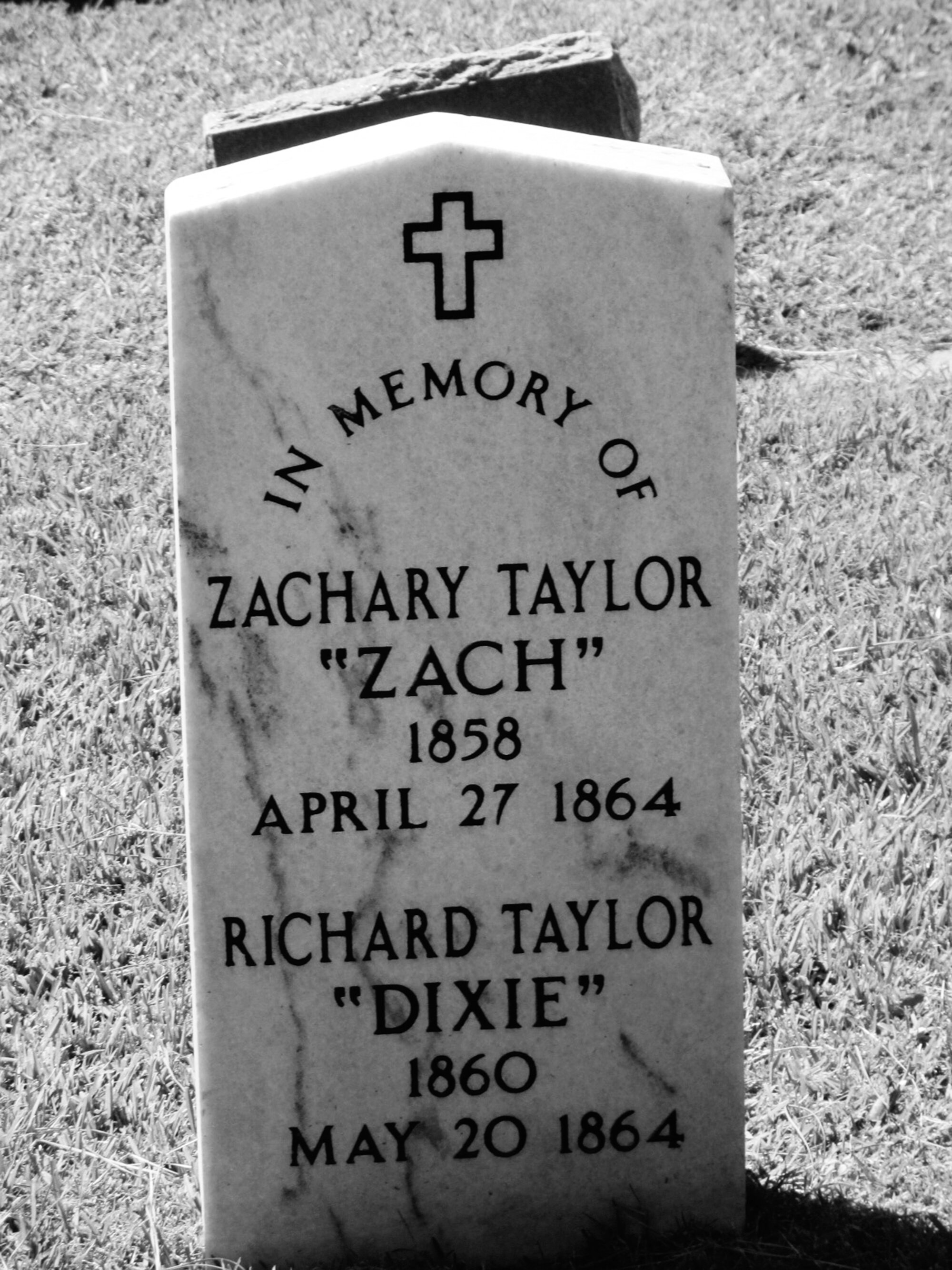
Many families fled south Louisiana ahead of General Banks and came to Shreveport during 1863-1864, causing the city’s population to nearly triple. Among that number were the wife and four children of General Richard Taylor, son of U.S. President Zachary Taylor, and the commander of the District of Western Louisiana which was headquartered in Opelousas. In Alexandria on April 25, 1863, Taylor put his family aboard a steamboat with many other refugees to go up river ahead of the conflict. All four of the Taylor children contracted scarlet fever while en route to Shreveport. Zachary Taylor, aged 5, died before reaching the city. His younger brother Richard lingered until May 20, just one month shy of his third birthday. The two older sisters, Louise and Betty, both recovered with no lingering ill effects. The illness was quite common in winter and early spring, and often reached epidemic proportions among combatants and civilians alike during the war, especially in crowded populations.
It is a heartbreaking story that illustrates the precariousness of life in the nineteenth century, for scarlet fever is an illness easily treated today with modern antibiotics. General Edmund Kirby Smith arranged for the funerals of the children. The brothers are buried next to each other in Oakland Cemetery, with a two-sided marker identifying them with name and dates on one side, and on the reverse as “Sons of Lt. General Richard Taylor” and “Grandsons of President Zachary Taylor.”
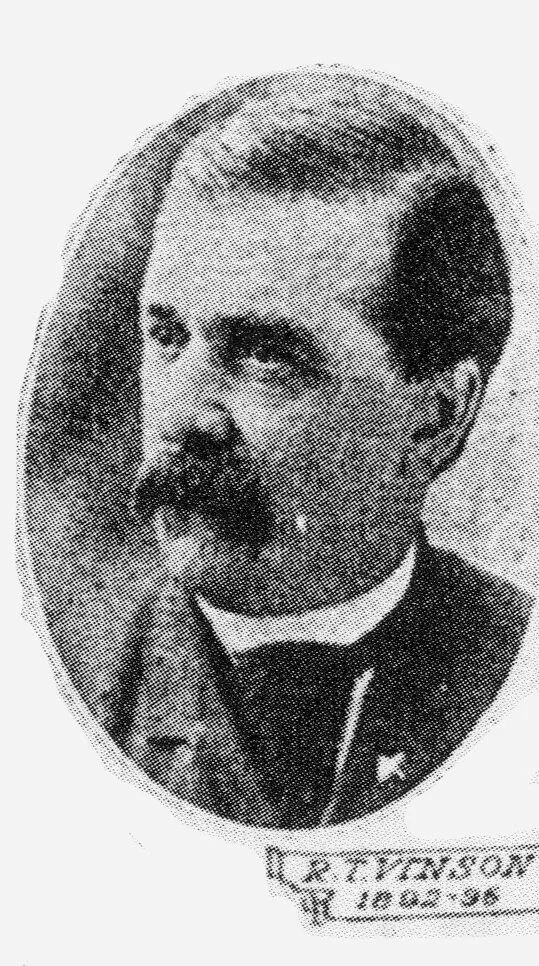
Richard Tucker Vinson
Mayor of Shreveport from 1892 until 1896, Richard T. (“Dick”) Vinson is responsible for beginning some of the street improvements that his immediate successor, Rueben McKellar, would expand and continue. During his mayoral term, many of the main thoroughfares in the downtown area were substantially improved by the addition of gravel to dirt. In addition, to the heavily-trafficked crossings was added vitrified brick, which is brick that has been glazed to make it impervious to water. Because of this popular and noteworthy improvement of the time, Richard Vinson became affectionately known as “Vitrified Dick.”
Born to successful antebellum sugar planters, Vinson was a native of Assumption Parish and volunteered for the Confederacy while a college student. He quickly rose to the rank of Captain, despite a brief medical discharge due to measles, and upon re-enlistment was transferred to the artillery division in Shreveport. After the war, Vinson pursued farming in the area and began what would prove to be a life-long interest in politics. In addition to serving as Shreveport mayor, he also served terms on both the Caddo and Bossier Police Jury.
It was as Shreveport’s mayor, however, that Vinson left his mark. In addition to the street improvements, his tenure also witnessed remarkable expansion of Shreveport’s rail capacity, concluding with an agreement he reached with Kansas City Southern to construct rail lines into the city. It was also during Vinson’s mayoral administration that the work was completed on the second Caddo Parish Courthouse. Work began on the building in 1891 and was completed in 1896. It was located on the Texas Street site of the current 1928 structure.
Vinson was married to Sallie Hill, a Tennessee native, and the couple had two children, Allen and Adah. Son Allen is buried in the family plot at Oakland, and daughter Adah is buried in a separate plot. After Vinson’s death in 1904, Adah took up the cause of maintaining memorials within Oakland Cemetery for Confederate war veterans.
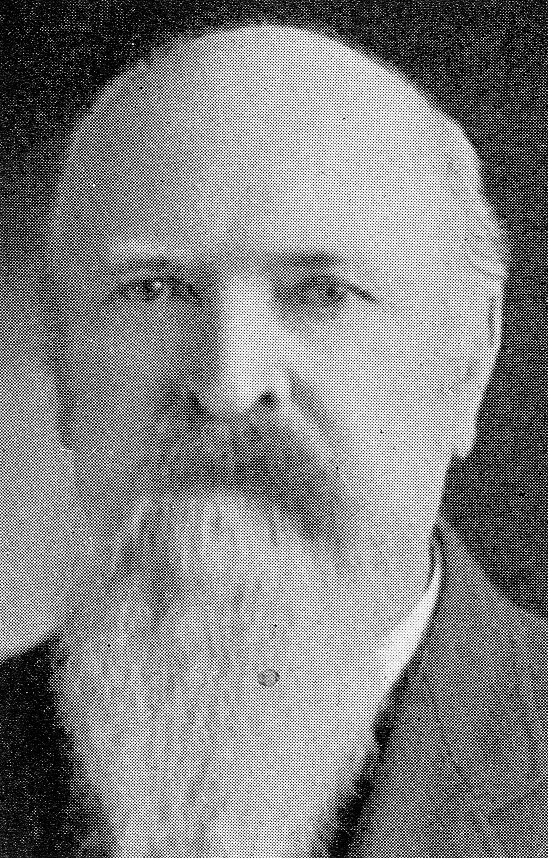
Colonel Samuel J. Ward
Born in Wales in 1834, Ward came as a young boy to Cape Girardeau, Missouri. He reached early adulthood upon the outbreak of the Civil War, and although Missouri was a “border state” occupied quickly by Union forces, he enlisted in the Confederate Army. Ward served as commander of the Eighth Missouri Cavalry under General John S. Marmaduke in the Trans-Mississippi Department. Throughout the conflict, he saw military action in Missouri, Arkansas, Tennessee, and Louisiana, before being released from service in Shreveport in 1865.
Ward remained in the area briefly following the war, long enough to marry Kate Hodges from Bossier Parish, before moving back to Missouri, where the couple lived for several years. His return to Shreveport led him follow his fellow Confederate veterans in joining the General Leroy Stafford Camp No. 3 of the United Confederate Veterans. This was the third oldest such organization in the South.
Ward’s return was punctuated by his colorful and outspoken politics and a reactionary zeal to the presence of Reconstruction officials in the state. Besides being the first Democrat in an era of Republican Reconstruction to be elected mayor of Shreveport, he also served as Sheriff of Caddo Parish from 1900 until his death in 1906. He is one of only a few men who served in both capacities. His wife Kate predeceased him the year before. During the turbulent years of Reconstruction, Louisiana was torn between the disenfranchised former Confederates, who were solidly democrats, and the Republicans, who were black former slaves, carpetbaggers from the North, and Scalawags, who were Southerners that cooperated with Federal authorities. The Democrats Samuel Douglas McEnery for governor of Louisiana in 1872, but the Federal Army, under martial law, found the election illegal and voided the vote. For a brief period, Louisiana had two governors, two legislatures, and two bureaucracies before the the Federal courts put an end to the situation. Samuel Ward served as McEnery’s adjutant general. He reprised this role during McEnery’s administration from 1881 to 1888.
The Wards had two sons, Samuel and Robert. The couple rest together at Oakland Cemetery.
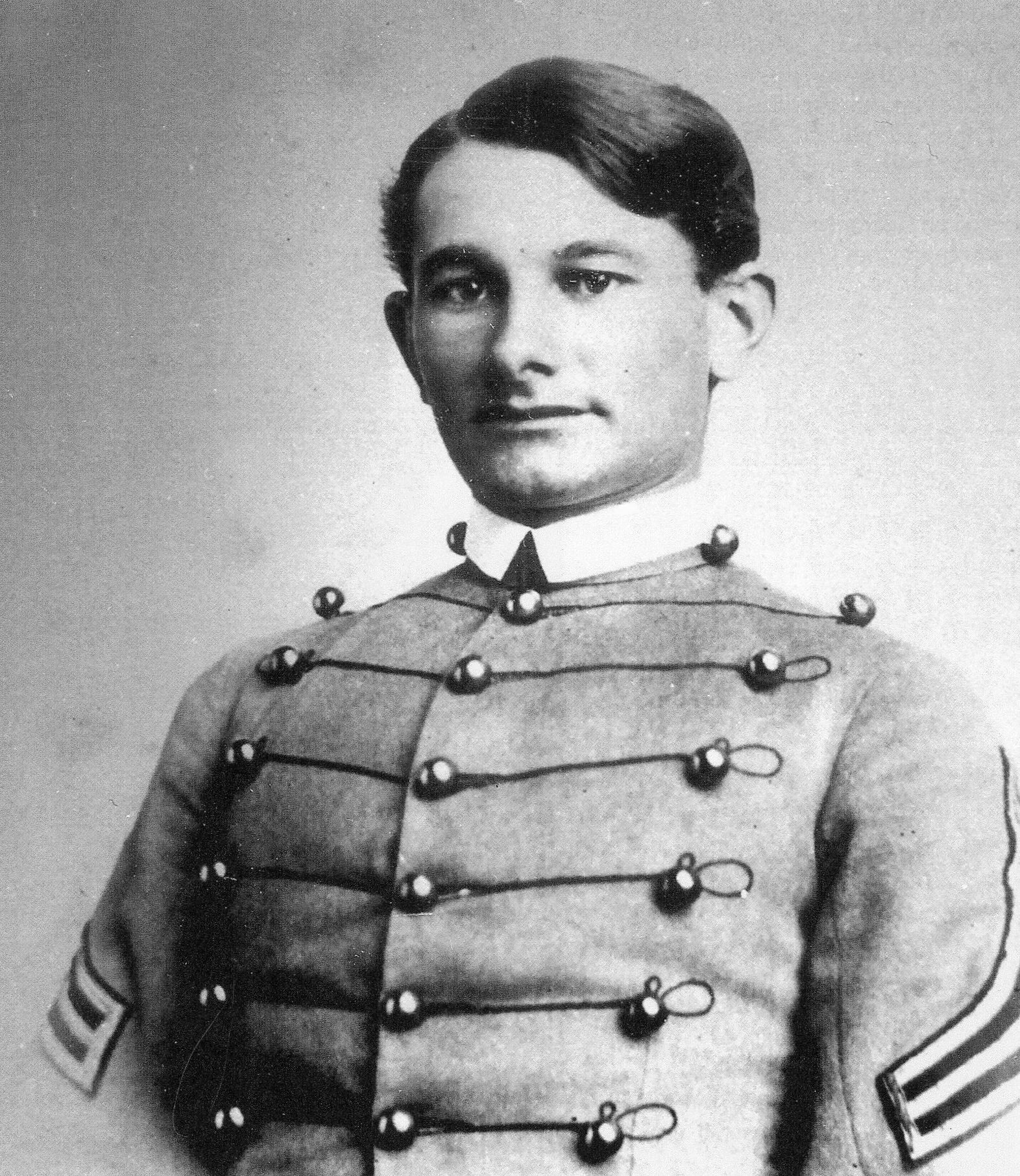
Lieutenant Eugene Woodruff
One of the greatest heroes of the 1873 Yellow Fever epidemic in Shreveport was an Iowa native and Union army veteran who served as part of an operation to clear the remaining logjam on the Red River, a point in history which happened to coincide with the epidemic. Over the decades since the initial raft clearing completed by Capt. Henry Miller Shreve, drift wood and debris had gradually filled up portions of the river channel, making steamboat travel a challenge by 1872. . Lieutenant Eugene Woodruff of the United States Army Corps of Engineers came to Shreveport in 1872, when work commenced again on the river to clear remaining debris that was impeding commerce.
When the Civil War broke out, Woodruff entered the Union army, enlisting in July 1861 in Company “E” of the 5th Iowa Infantry, and reached the rank of Corporal before he received the surprising news that he had been recommended to enter West Point Military Academy as a cadet. He graduated from West Point in 1866 and received a commission as a Second Lieutenant in the Army Corps of Engineers. The following year he was promoted to the rank of Lieutenant. Prior to receiving orders to report to Shreveport, Woodruff was stationed in Missouri, Wisconsin, and Michigan. In 1871, he was tasked with making a survey of the obstructions on the Red River and his report served as the basis for Congress appropriating the funding of $150,000. From Lt. Woodruff’s reports and letters home, together with his brother George who served as his adjutant, historians are able to glean interesting details about not only the task facing the Army Corps of Engineers with regard to the Red River, but also about the Yellow Fever outbreak that was threatening Shreveport.
Lt. Woodruff noted that on Wednesday, September 10, 1873, he arrived for a mid-morning meeting downtown, only to find people suddenly and seriously ill. He found the city in near-chaos and immediately put himself in the service of the sick and dying. On the following day, he recounted that he went to Morris Drug Company to dispense medications for the sick, because the epidemic had also claimed the local druggists. Woodruff was therefore also able to keep detailed records about the treatments being used for Yellow Fever victims. The fact that he personally cared for sick strangers is documented in his diary. Woodruff made brief entries noting that for a period of about a week, he went with little sleep and with apparently little regard for his own safety. Although the Army Corps of Engineers ordered his detachment out of the city due to the epidemic, Woodruff chose to stay behind at the cost of his own life. He wrote his mother that he sent his brother and his men to the relative safety of the Mississippi River and that he could not leave these stricken people who needed his help.
Woodruff’s story is remarkable and compelling. That a Union army veteran would be hailed a hero during Reconstruction in Louisiana was unlikely enough, but that such a man selflessly sacrificed his own health to care for strangers in an adopted city certainly warrants such. Woodruff was buried in the Elstner family plot in Oakland Cemetery, donated by the family with whom he had resided during this time in Shreveport. The city government drafted a special “Tribute of Respect” resolution to send to Woodruff’s family, wherein it is noted that he “fell a victim to the dreadful scourge of Yellow Fever, while engaged in the Christian and philanthropic duty of attending to the afflicted and relieving the distressed.”